
Uneven floors, potholes, gravel, mud—forklifts face all kinds of surfaces. Many buyers ask me:
“Frank, can a forklift be driven anywhere?”
No, you cannot drive a forklift over any surface. Most forklifts require firm, flat ground such as concrete or asphalt. Soft soil, gravel, mud, and uneven outdoor surfaces cause instability, sinking, tipping risks, and traction loss. Only rough-terrain forklifts are built for all-surface use.
I once watched a customer’s forklift sink halfway into a muddy yard in Brazil. The driver wasn’t hurt, but the recovery took three hours—and one broken pallet later, they finally asked me to redesign their traffic routes.
What Surfaces Can a Forklift Safely Drive On?
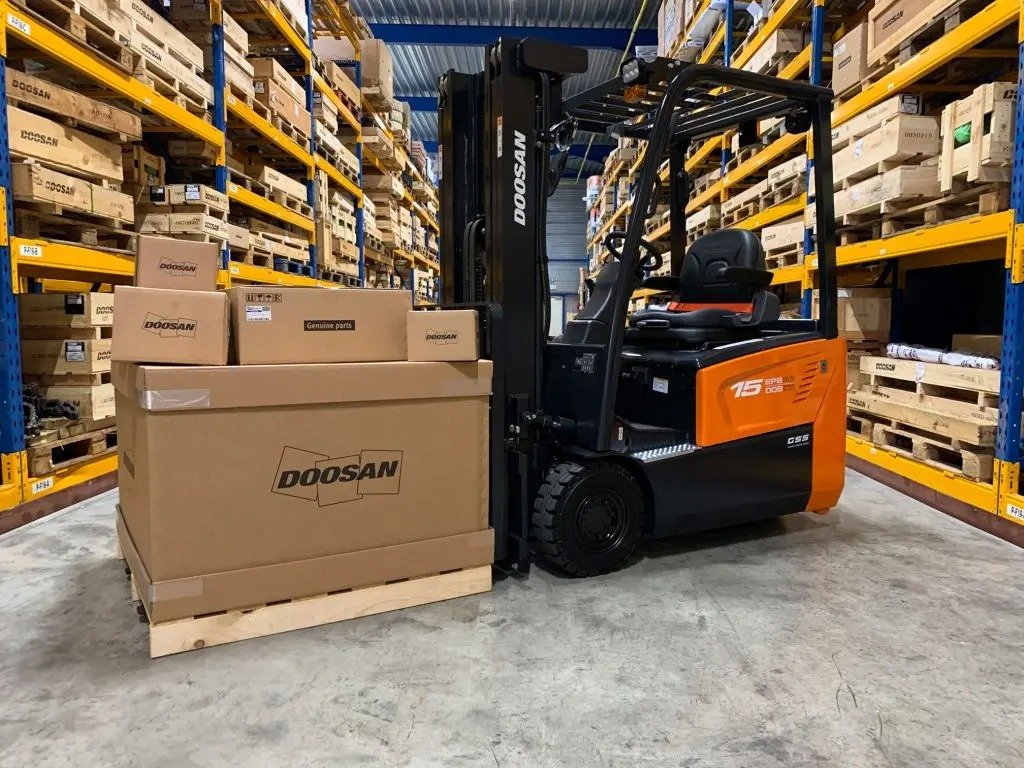
A forklift can safely drive on firm, flat surfaces such as concrete, polished warehouse floors, epoxy-coated industrial floors, and compacted asphalt. These surfaces provide the traction and stability needed for standard electric or diesel forklifts.
Even OSHA emphasizes maintaining safe surfaces for powered industrial trucks:
👉 https://www.osha.gov/powered-industrial-trucks
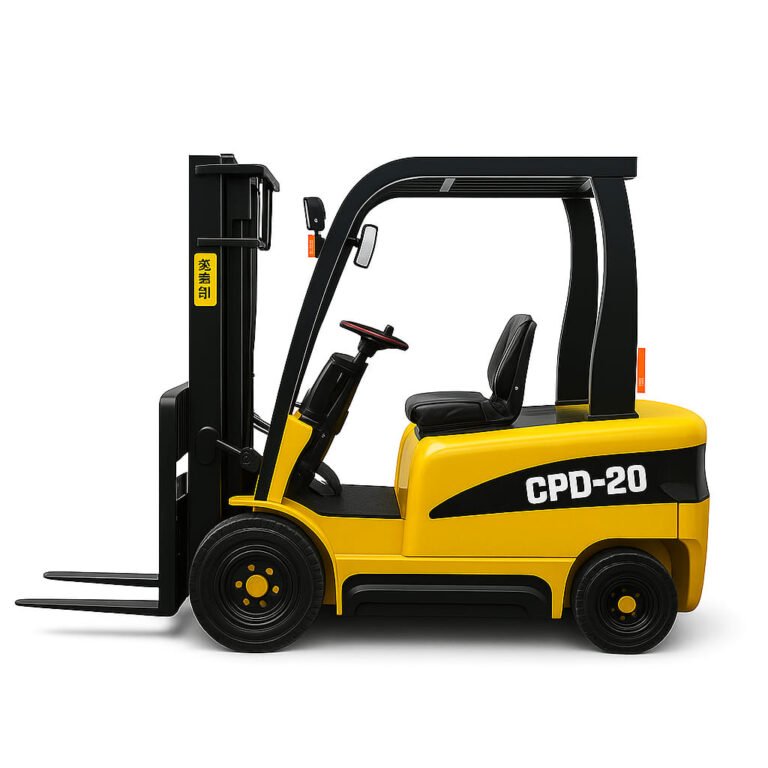
Most forklift types—especially the 1.5–3.5T electric models we manufacture at Voltruk—are optimized for indoor warehouse conditions. Their low ground clearance, cushion/solid tires, and load stability depend heavily on surface quality.
When the ground is smooth and firm, the forklift’s center of gravity remains predictable, braking distance is short, and steering is precise. That’s why global factories, distribution centers, 3PL warehouses, and retail backrooms rely mainly on concrete and polished industrial floors.
Even asphalt works well when compacted. In the Middle East, I test forklifts early mornings because soft asphalt under extreme heat can reduce tire life—a real problem confirmed by NIOSH field reports:
👉 https://www.cdc.gov/niosh/topics/forklift
Why Concrete Floors Are Ideal
Concrete floors provide the ideal balance of durability, traction, and consistency. They minimize vibration, reduce tire wear, and improve precision—especially for electric forklifts with tight turning radii.
High-bay warehouses (8–12 meters) depend on concrete because even minor irregularities can cause mast sway. Toyota Material Handling recommends smooth, well-maintained floors for safe operations:
👉 https://www.toyotaforklift.com/resource-center
For Voltruk customers, I advise regular inspection of joints, gaps, and cracks. Uneven floors shift the load’s center of gravity. A pallet lifted only 20–30 cm can rock dangerously if you hit a bump.
Concrete also distributes weight effectively. A 3-ton forklift may exert 5,000–6,000 kg of downward pressure, which soft surfaces cannot disperse evenly.
When Asphalt Works Well
Asphalt is common in yards, docks, and exterior circulation areas. Forklifts operate safely on well-finished, compacted asphalt, but temperature sensitivity is a key concern.
In hot regions—Saudi Arabia, UAE, Thailand—soft asphalt can deform under forklift weight. This leads to:
- tire sinking
- uneven tracks
- rapid tire wear
- axle stress
Hyster-Yale documents similar asphalt challenges in outdoor operations:
👉 https://www.hyster.com/north-america/en-us/support/white-papers/
My rule: If asphalt feels soft under your shoe, it’s too soft for your forklift.
Why Forklifts Cannot Drive on All Surfaces
Forklifts cannot drive on all surfaces because they’re built for flat, hard ground. Soft soil, gravel, mud, grass and uneven terrain cause traction loss, sinking, and tipping. Only rough-terrain forklifts are designed for these environments.
Forklifts rely on low ground clearance, small industrial tires, and a forward-mounted load—all sensitive to terrain changes.
When driving over unstable ground, three major risks appear:
- Loss of traction – tires spin or slide
- Center of gravity shift – bumps cause tipping
- Sinking – soil cannot support the load
A 2.5-ton forklift often weighs 4,000–7,000 kg with load, far more than buyers expect.
Even Voltruk electric forklifts—with AC motors, reinforced axles, and sealed controllers—require stable surfaces.
Stability Triangle Limitations
Every forklift operates inside a stability triangle formed by the two front wheels and the pivoting rear axle.
Yale explains this clearly in their safety literature:
👉 https://www.yale.com/north-america/en-us/support/safety/
On uneven surfaces, the combined center of gravity may shift outside this triangle. Even small dips or right-side depressions can destabilize a raised mast.
This is why rough-terrain forklifts have:
- large pneumatic tires
- high ground clearance
- articulated frames
Standard warehouse electric forklifts do not.
I once saw a Turkish client attempt to cross a sloped gravel strip. The forklift didn’t tip—but the pallet slid off sideways. The lesson: “Almost flat” is not flat enough.
Tire Type Limitations
Warehouse forklifts typically use:
- Cushion tires (indoor, smooth floors)
- Solid tires (indoor + light outdoor)
These do NOT perform well on:
- gravel
- loose stones
- sand
- mud
- grass
- construction areas
These conditions require deep-tread pneumatic tires, which only rough-terrain forklifts are equipped with.
Wrong tire usage leads to:
- sliding
- bouncing
- wheel hub stress
- inability to brake consistently
Voltruk forklifts use industrial solid tires for concrete and asphalt. Even with optional wide tires, they are not substitutes for true off-road models.
Load Height & Traction
Load height dramatically affects traction. When lifted, the center of gravity moves forward, reducing rear-wheel grip. Uneven surfaces amplify the effect.
On rough terrain, a raised pallet can cause:
- load sway
- steering loss
- front wheel lift
- sudden traction drop
That’s why OSHA advises traveling with loads 10–15 cm above the ground:
👉 https://www.osha.gov/sites/default/files/publications/OSHA2254.pdf
Indoors, higher loads are manageable. Outdoors, they’re unsafe.
Surface Types and Safety
Concrete and asphalt are safe. Gravel, mud, grass, and soft soil are unsafe. Uneven or unstable surfaces increase tip-over risk and should be avoided unless using a rough-terrain forklift.
Concrete Floors
Concrete is the safest, most predictable surface. It offers high traction and uniform ground pressure.
During Voltruk QC tests, we measure AC drive torque and braking force on concrete because it provides the most accurate baseline. Pallet stability is easier to assess due to consistent ground contact.
Just maintain joints and cracks to avoid mast sway when carrying tall loads.
Asphalt / Pavement
Asphalt is generally safe but temperature-sensitive. In hot regions, asphalt softens enough to form depressions under forklift tires.
Safe when:
- compacted
- level
- moderate temperature
Unsafe when:
- softening
- potholes
- loose debris
Reduce speed during long outdoor travel to minimize vibration and heat.
Gravel
Gravel looks harmless but is highly unstable. Stones shift under load, causing:
- tire sink
- rocking
- mast sway
- unpredictable braking
Unless using a rough-terrain forklift, avoid gravel. Even leading manufacturers like JCB warn against operating standard forklifts on gravel.
👉 https://www.jcb.com/en-gb/products/rough-terrain-forklifts
Dirt / Soil
Loose soil lacks compaction and cannot support forklift ground pressure. Even “hard” soil softens quickly under weight or rain.
Standard forklifts will sink slightly, causing:
- steering stiffness
- traction loss
- forward instability
These conditions require high-clearance, pneumatic-tire machines.
Mud / Wet Surfaces
Mud is the most dangerous surface. Tires lose grip instantly. Steering becomes unpredictable. Loads sway with ground irregularities.
Wet environments also increase electrical and mechanical stress, even with sealed controllers.
Avoid mud whenever possible.
Ramps
Ramps shift the forklift’s center of gravity forward/backward.
Safe operation:
- forks low
- mast tilted back
- slow speed
- straight line
- load uphill
Never drive sideways on a ramp.
How to Evaluate a Surface Before Driving
Inspect firmness, traction, levelness, and moisture. If your shoe slips or sinks, your forklift will too.
4-Step Surface Inspection Checklist
- Firmness – Press your heel into the ground. If it shifts, avoid it.
- Traction – Try sliding your shoe. Slippery = unsafe.
- Levelness – Look for dips/slopes affecting the stability triangle.
- Moisture & debris – Mud, sand, or puddles are immediate hazards.
You can print this and attach it to forklifts. Voltruk also provides custom OEM labels on request.
How Voltruk Forklifts Improve Stability on Mixed Surfaces
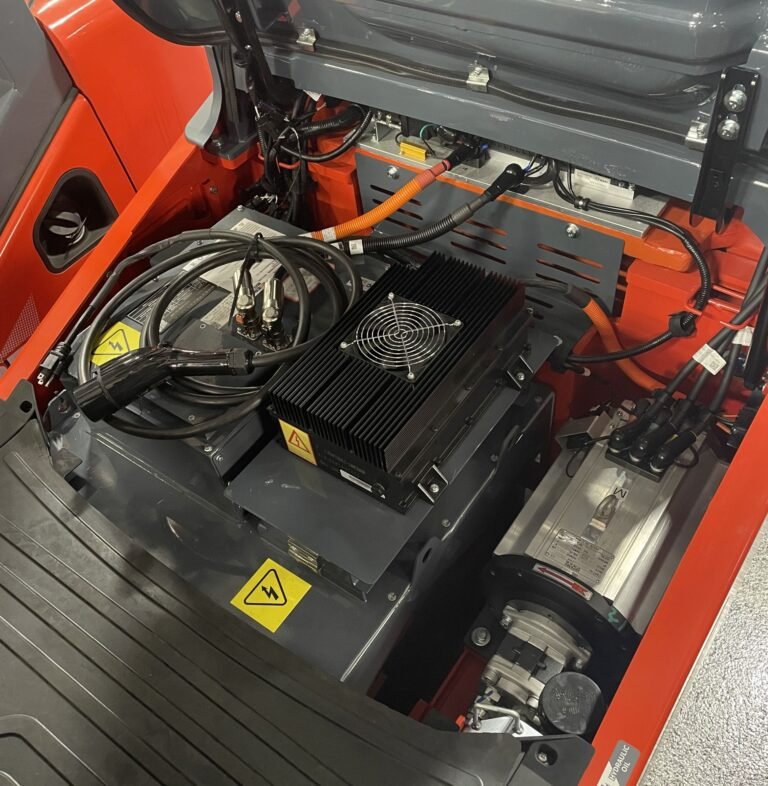
Voltruk forklifts use AC motors, sealed controllers, reinforced axles, and heavy lithium counterweighting for smooth, stable handling on concrete and asphalt.
AC Drive System
AC drive eliminates brushes and delivers smooth torque. Predictable acceleration prevents pallet shift and improves traction on slightly uneven surfaces.
We test acceleration ramps and controlled braking during QC to ensure stability even at slow speeds.
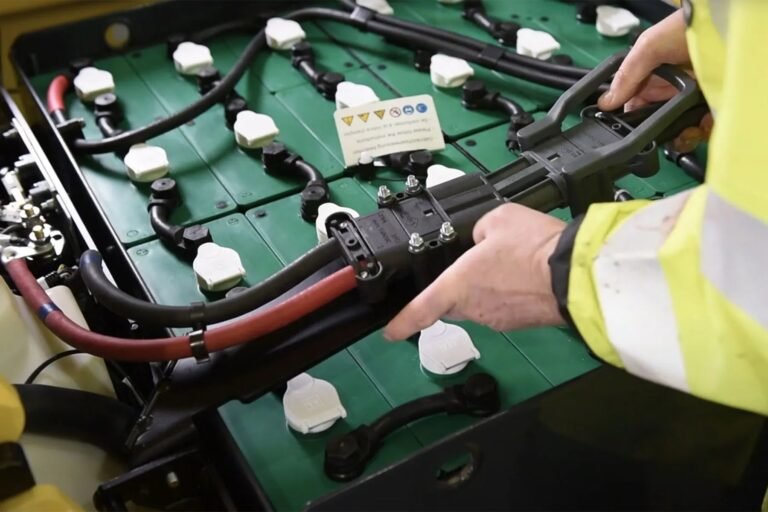
Lithium Battery Weight
Lithium packs (CATL, EVE, Gotion) act as dense, low-mounted counterweights that lower the center of gravity.
Lithium avoids the sloshing effect seen in lead-acid batteries—improving stability on slightly uneven surfaces.
Reinforced Axles & Sealed Controllers
Reinforced axles absorb shock from dock transitions. Fully sealed controllers resist dust and moisture.
These features make Voltruk forklifts ideal for:
- concrete
- epoxy
- warehouse asphalt
- light outdoor use
But not for deep gravel or mud.
Conclusion
Forklifts cannot drive on every surface—and they’re not meant to. Concrete and asphalt are ideal. Gravel, mud, and soft soil are unsafe for standard forklifts.
At Voltruk, we design electric forklifts for stable, predictable operation across global warehouse environments. With factory-direct pricing, 1-unit MOQ, OEM branding, and LA warehouse stock, we help distributors and rental fleets build safer operations at better cost.
Need help choosing a model or planning your yard?
👉 Contact: info@voltruk.com
👉 Get a wholesale quote
👉 Request OEM samples
👉 Visit LA warehouse
FAQ (10)
Q1: Can a forklift drive on gravel?
A1: No. Gravel is unstable unless using a rough-terrain forklift.
Q2: Can electric forklifts go outside?
A2: Yes—on concrete or asphalt. Avoid mud and grass.
Q3: What surface is best for forklifts?
A3: Smooth concrete.
Q4: What happens if a forklift drives on mud?
A4: Tires lose traction and the forklift may sink.
Q5: Can forklifts drive on slopes?
A5: Yes—straight, slow, load uphill.
Q6: Are cushion tires good for outdoor use?
A6: No. They’re for indoor floors.
Q7: Do solid tires work on rough terrain?
A7: No. Use pneumatic tires.
Q8: How much weight does a forklift put on the ground?
A8: Often over 5,000–7,000 kg with load.
Q9: How should I evaluate my yard surface?
A9: Check firmness, traction, levelness, moisture.
Q10: How do Voltruk forklifts handle mixed surfaces?
A10: Reinforced axles + AC motors + lithium weight distribution.