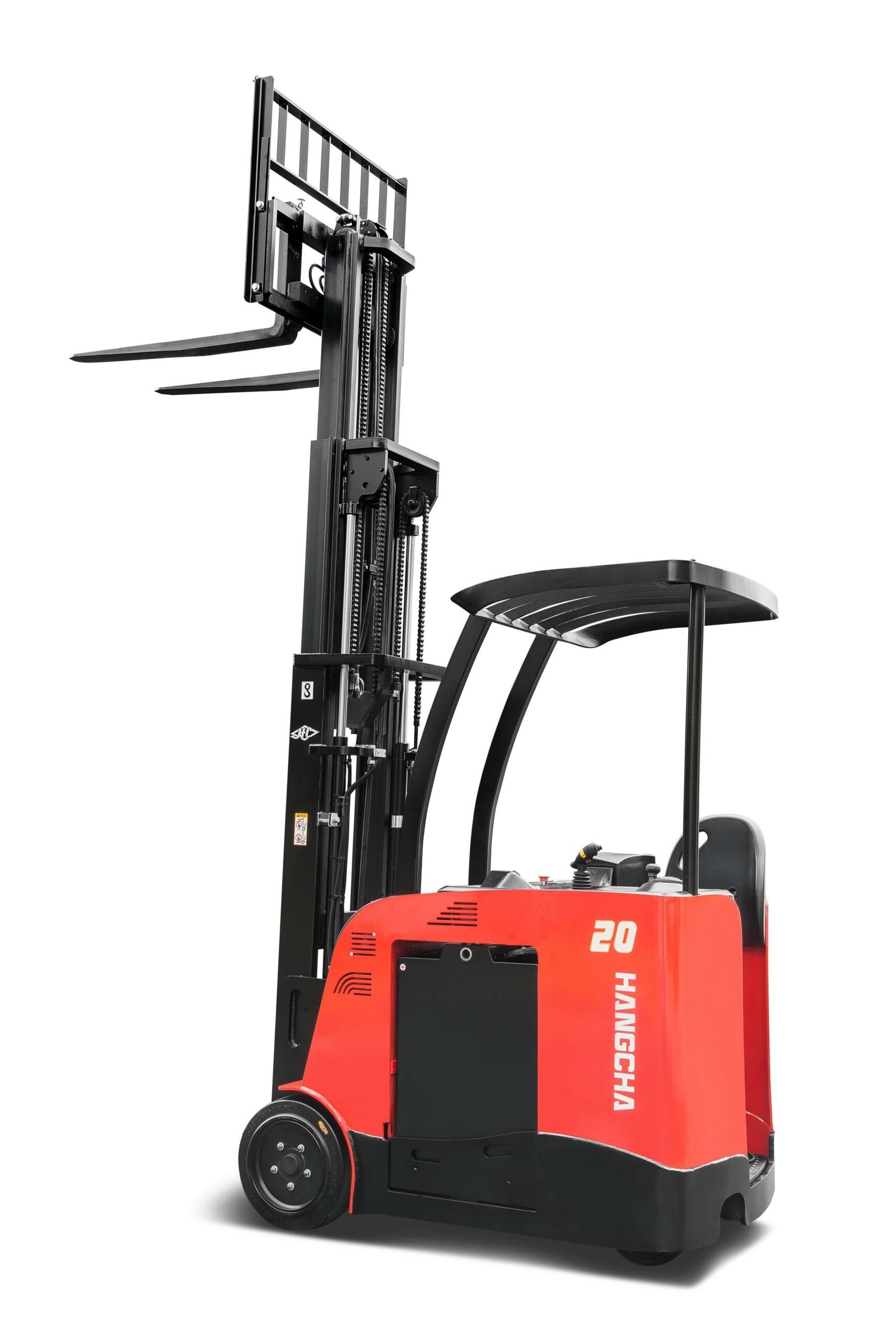
Choosing the wrong equipment slows down your warehouse and increases long-term cost. Many buyers ask me the same question:
“Frank, should I buy a reach truck or a forklift?”
A reach truck is designed for narrow aisles and high-bay racking (8–12 m), using a forward-extending mast. A forklift (counterbalance truck) is built for heavier loads, indoor/outdoor use, and general material handling. Reach trucks maximize space; forklifts maximize versatility and stability.
I once visited a customer in Spain who doubled his storage capacity simply by switching part of his fleet from forklifts to reach trucks. That decision saved him from renting a second warehouse—just because he finally understood the difference.
What Is a Reach Truck?
A reach truck is a warehouse vehicle with a forward-extending mast designed for narrow aisles and high-bay racking. It offers excellent maneuverability in tight spaces and can lift pallets to 8–12 meters with precision.
A reach truck is essentially the specialist of vertical storage. When I work with 3PL or e-commerce customers—especially those with narrow aisles between 2.7–3.2 meters—the first equipment we evaluate is always the reach truck. Unlike forklifts, reach trucks “reach” forward to access pallets without driving the whole machine into the rack area, greatly reducing aisle width requirements.
In most warehouses I’ve visited, a well-configured reach truck can replace 2–3 small stackers, improve speed, and reduce operator fatigue. Drivers love them because steering is light and visibility at height is excellent. For many distributors I support, reach trucks are the core of their warehouse strategy.
Ideal industries include:
- E-commerce
- Food distribution
- Pharmaceuticals
- Cold chain
- Any high-bay racking operation
Because a reach truck is built for precision—not outdoor durability—using it outside causes unnecessary wear (vibration, dust, hydraulic sensitivity).
For reference on warehouse aisle standards, you may refer to OSHA warehouse guidelines:
https://www.osha.gov/warehousing
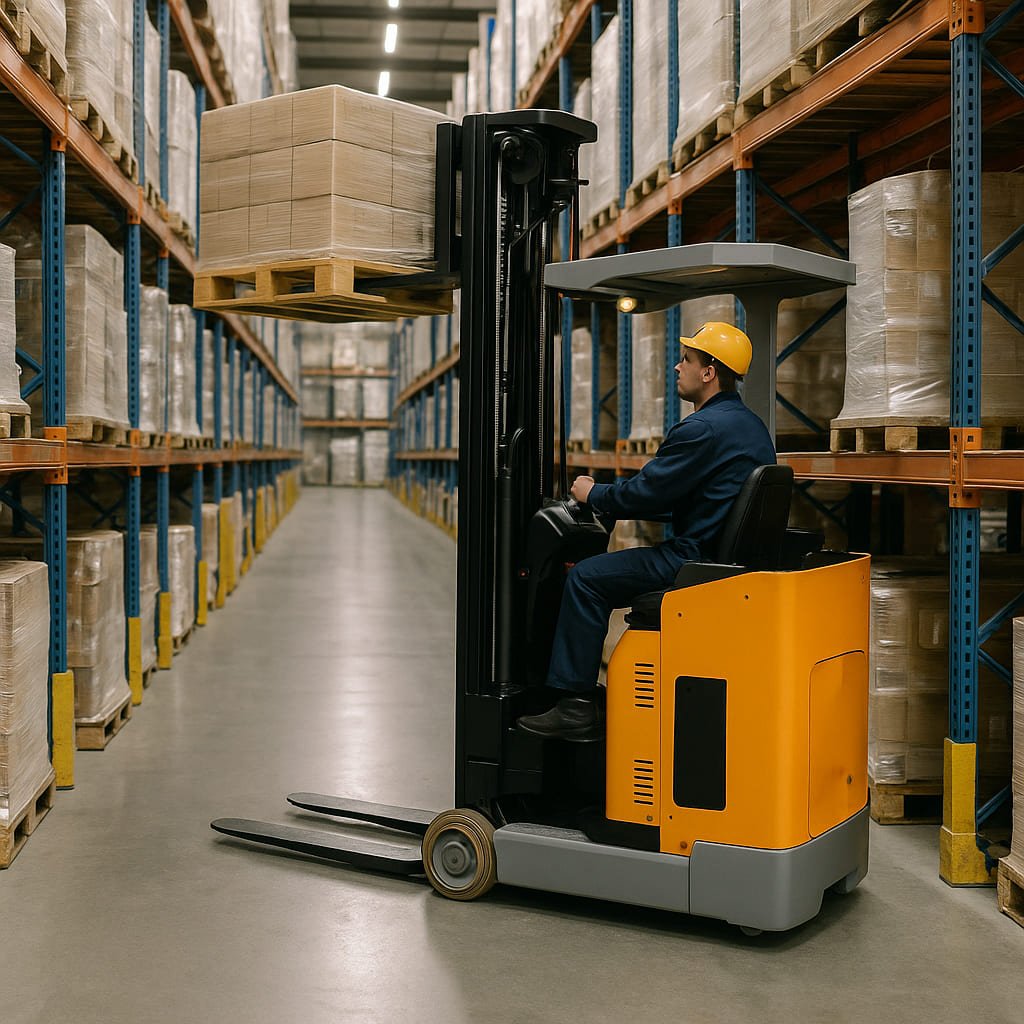
Key Components of a Reach Truck
Reach trucks share several engineering features:
- Forward-moving mast
- Adjustable outrigger legs
- Compact chassis
- High-precision hydraulic cylinders
- Sideways seating or standing cabins for better height visibility
Typical lift heights:
6–12 meters depending on mast configuration.
This introduces major stability challenges, which is why reach trucks rely on sophisticated tilt control and weight distribution systems.
During cold-chain deployments, I always remind buyers to lubricate mast channels regularly—low temperatures thicken hydraulic oil and slow lifting.
For cold storage operating guidelines, reference:
https://www.osha.gov/cold-stress
Where Reach Trucks Deliver the Best ROI
Reach trucks give the highest ROI when:
- Aisles are ≤3.2 m
- Racking height >8 m
- Picking frequency is high
- Operators work long shifts at height
One Dubai client reduced aisle width by 40% after switching from forklifts to reach trucks, adding 400+ pallet positions with zero construction cost.
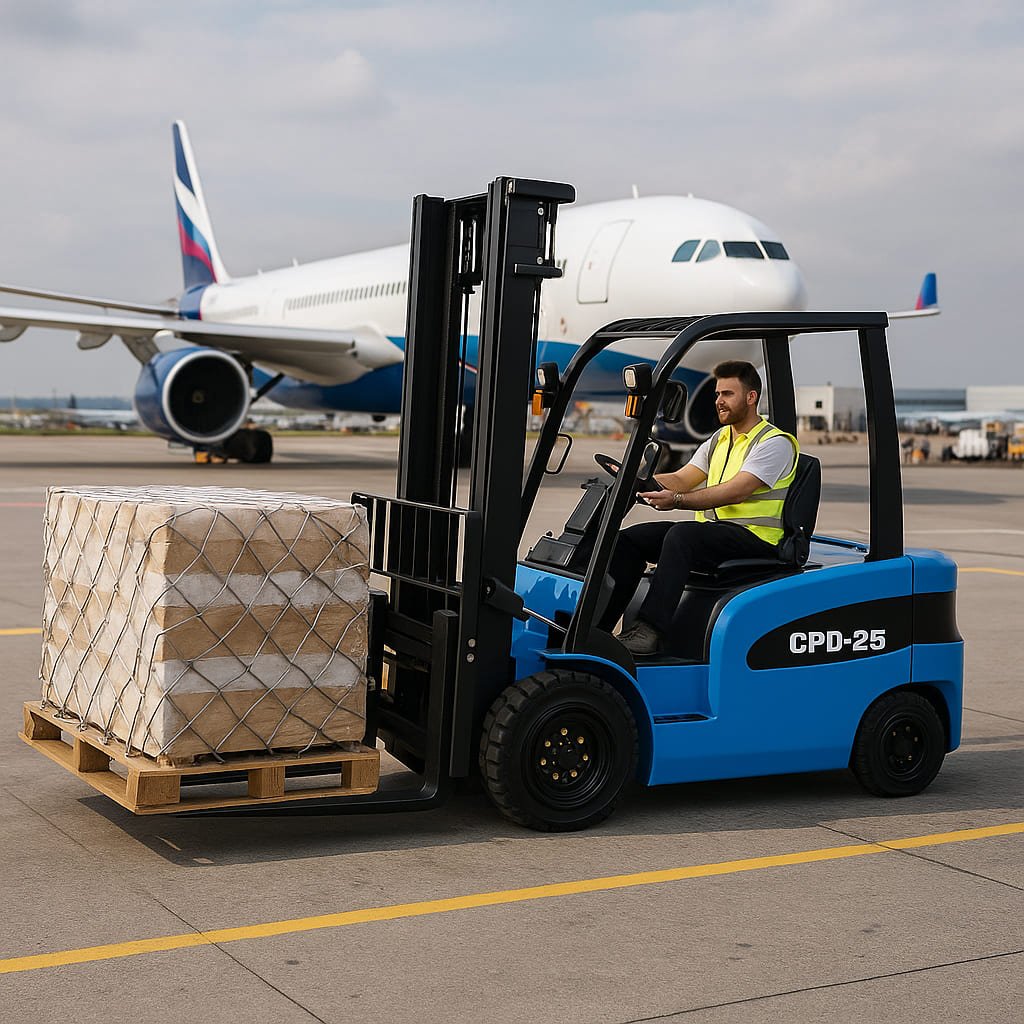
What Is a Forklift?
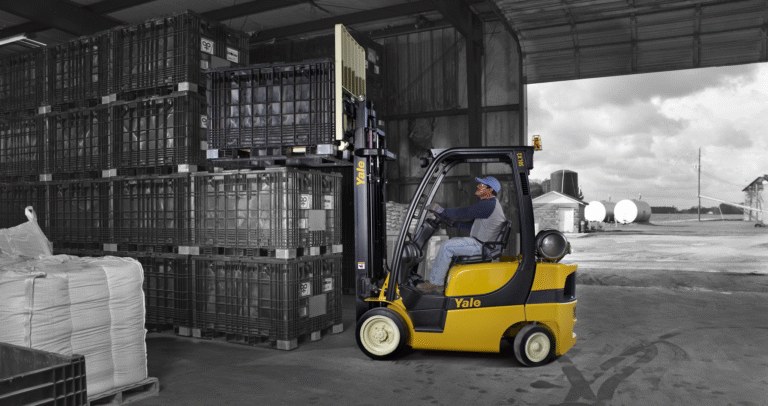
A forklift (counterbalance truck) is a versatile machine designed for lifting and moving pallet loads indoors or outdoors. It uses a rear counterweight for stability, making it suitable for heavy loads and uneven surfaces.
Compared with reach trucks, forklifts are the everyday workhorse. About 70% of global material-handling operations still rely on forklifts because of their durability and versatility.
Forklifts go almost anywhere:
- Factories
- Ports
- Farms
- Supermarkets
- Outdoor yards
A forklift’s counterweight stabilizes the truck, but it demands more aisle space (3.0–3.8 m). Forklifts also climb slopes better than reach trucks.
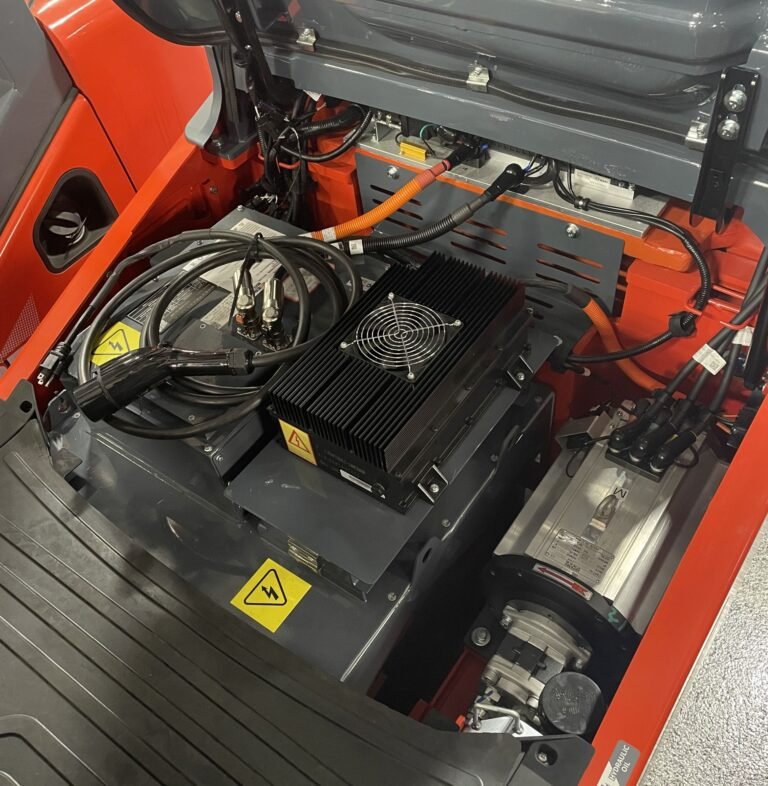
Our Voltruk electric forklifts (1.5–3.5T) are built for indoor warehouses and light/medium outdoor use, powered by lithium options from CATL, EVE, or Gotion.
Forklift Structure and Capabilities
Forklifts use a proven structure:
- Rear counterweight
- Front mast
- Drive axle + steering axle
- AC motor (electric versions)
- Hydraulic lift system
This design moves the entire truck toward the pallet—unlike reach trucks which extend forward.
Typical lift height: 3–6 meters, suitable for most warehouses.
Forklifts offer:
- High stability on uneven floors
- Strong hydraulic systems
- Robust tires
- Better performance on ramps
For forklift safety standards, reference ANSI/ITSDF B56.1:
https://www.itsdf.org
When Forklifts Are the Better Choice
Forklifts give better ROI when:
- Outdoor driving is required
- Loads are heavy (3–5 tons)
- Aisles are ≥3.5 m
- No high-bay racking is present
- You need a multipurpose machine
A customer in Mexico replaced three reach trucks with two 3-ton forklifts because his operation moved outdoors—forklifts had better torque, traction, and lower maintenance.
Core Differences Between a Reach Truck and a Forklift
The key differences involve aisle width, lift height, load capacity, stability, and indoor/outdoor suitability. Reach trucks excel in narrow aisles and high racking; forklifts excel in heavy loads, uneven flooring, and outdoor work.
| Feature | Reach Truck | Forklift |
|---|---|---|
| Aisle Width | Narrow (2.7–3.2 m) | Wide (3.0–3.8 m) |
| Lift Height | 8–12 m | 3–6 m |
| Load Capacity | 1–2 tons | 1.5–5 tons |
| Environment | Indoor only | Indoor & outdoor |
| Stability | High at height | High on uneven floors |
| Turning Radius | Very small | Medium |
| Maintenance | Precision-focused | General/standard |
| Best Fit | E-commerce, high racks | Factories, loading yards |
Aisle Width and Maneuverability
A reach truck’s compact chassis and sideways cabin create a significantly smaller turning radius—ideal for maximizing storage density.
Forklifts require more space because their counterweight extends behind the truck.
A storage layout redesign in Poland cut aisle width by one meter by switching to reach trucks. Storage capacity increased 18%, without any structural changes.
Height and Stability Differences
Reach trucks dominate vertical storage, using forward-reaching masts and outriggers to stabilize loads.
They are not stable on ramps and should not be used outdoors.
Forklifts offer:
- Stronger horizontal stability
- Better slope performance
- More robust frames
For slope safety guidance, reference OSHA forklift operation rules:
https://www.osha.gov/forklifts
When Should You Choose a Reach Truck?
Choose a reach truck if you have narrow aisles, high racking, or operate indoors. Reach trucks maximize space efficiency and increase picking speed while reducing operator fatigue.
Always measure aisle width before deciding. Many warehouses are unintentionally forklift-unfriendly.
Reach trucks shine when:
- Running multi-shift cycles
- Handling goods above 7 meters
- Operators require fine hydraulic control
Common Mistakes When Buying a Reach Truck
Top three miscalculations I see:
1. Floor flatness
High lifts require smooth floors to prevent mast vibration.
ANSI flatness guidelines: https://www.concrete.org
2. Power requirements
Weak batteries slow lifting.
Voltruk recommends lithium (CATL/EVE/Gotion) for intensive work.
3. Temperature considerations
Hydraulic oil thickens in cold rooms—verify viscosity and lubrication schedules.
At Voltruk, every reach truck undergoes:
- Mast stability test
- Hydraulic seal inspection
- Lift-speed calibration
When Should You Choose a Forklift?
Choose a forklift when you need versatility, outdoor ability, heavier lifting, or mixed environments like factories and loading docks.
Forklifts excel in:
- Truck loading
- Yard transport
- Ramps and uneven ground
- Heavy loads
Many U.S. customers use a hybrid setup: electric forklifts indoors, diesel outdoors.
Mistakes to Avoid When Selecting a Forklift
Common forklift purchasing mistakes:
1. Overloading
Choose at least 20% higher capacity than your heaviest load.
2. Wrong tire choice
- Cushion: indoor
- Pneumatic: outdoor
3. Ignoring aisle width
Forklifts need far more room than reach trucks.
4. Using lead-acid batteries for long shifts
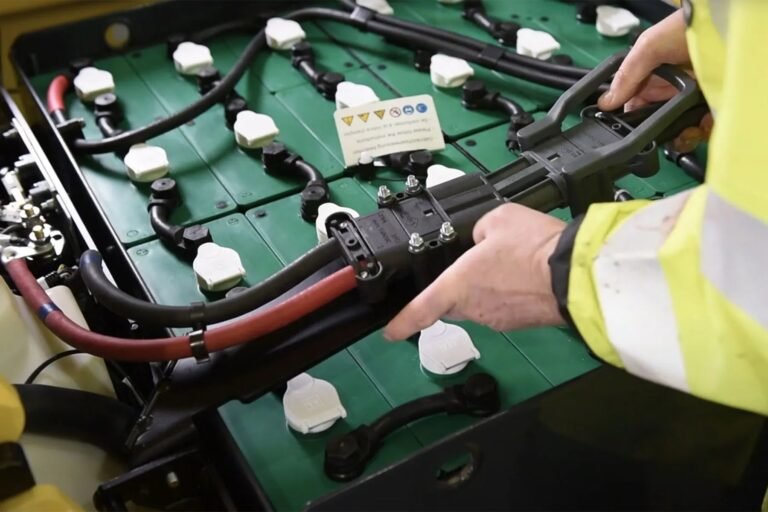
Lithium gives better runtime and zero maintenance.
Voltruk forklifts include:
- Maintenance-free AC motors
- Sealed controllers (water-resistant)
- Reinforced axles
Conclusion
If you run a high-bay indoor warehouse, a reach truck is almost always the smarter, space-saving investment.
If you need flexibility, outdoor capability, and stronger lifting, a forklift is the safer choice.
At Voltruk, we supply both electric reach trucks and 1.5–3.5T electric forklifts, all with:
- Factory-direct pricing
- 15–25 day delivery
- OEM branding
- LA warehouse stock for urgent U.S. orders
Ready to choose the right equipment?
👉 Get wholesale quote
👉 Request OEM samples
👉 Download temperature chart PDF
👉 Visit LA warehouse
👉 Email Frank: info@voltruk.com
FAQ (10)
Q1: Is a reach truck better than a forklift?
Not necessarily—they serve different purposes. Reach trucks excel in narrow aisles and high racks. Forklifts handle heavy loads, ramps, and outdoor work.
Q2: Can a reach truck be used outdoors?
Generally no. Outdoor vibration, dust, and uneven surfaces affect stability and damage hydraulics.
Q3: How high can a reach truck lift?
Typically 8–12 meters depending on mast configuration.
Q4: Which requires wider aisles?
Forklifts: 3.0–3.8 m.
Reach trucks: 2.7–3.2 m.
Q5: Are reach trucks more expensive than forklifts?
Yes, but they maximize space and give better ROI in dense warehouses.
Q6: Do forklifts work well in cold storage?
Yes, but lithium batteries handle low temperatures better.
Battery info: https://www.energy.gov/eere/vehicles/articles/lithium-ion-battery-basics
Q7: Which is easier to maintain?
Forklifts—they use simpler mechanics.
Q8: Typical load capacity of a reach truck?
1–2 tons. Forklifts: 1.5–5 tons.
Q9: Does Voltruk offer OEM?
Yes—color, logo, mast height, battery options, packaging.
Q10: Can I test a unit before buying?
Yes—video demos, QC reports, or LA warehouse visits are available.