
Electric forklifts are becoming one of the most reliable tools in modern warehouses, especially for distributors who want cleaner operations and lower long‑term costs.
Electric forklifts provide cleaner operation, lower operating costs, and smoother control for indoor warehouses, making them a preferred choice for many material‑handling teams comparing electric vs. diesel or LPG models.
During my factory visits and LA warehouse checks, I’ve tested dozens of models—and the biggest shift I see in 2025 is how quickly buyers are moving toward lithium forklifts.
A short story before we dive deeper:
Back in 2024, a client from Texas told me he replaced two diesel forklifts with Voltruk’s 2.5T lithium model. He said, “Frank, it’s the first time my warehouse doesn’t smell like fuel.” That stuck with me—and it’s exactly why I wrote this guide.
What is an advantage of using electric-powered forklifts?
Electric forklifts offer lower operating costs, smoother indoor performance, zero emissions, and significantly reduced maintenance compared with diesel or LPG forklifts.
When I help distributors compare models, I always start with long‑term cost. A diesel forklift might be cheaper up front, but once you add fuel, filters, engine repairs, and downtime—the real cost skyrockets. Electric forklifts solve most of that pain.
They’re quiet, clean, and incredibly stable inside warehouses. With lithium batteries (CATL, EVE, Gotion—your choice), runtime becomes predictable, and your team avoids unexpected breakdowns.
From a B2B perspective, electric forklifts also help sellers meet customer demands for safer and greener material‑handling operations.

Efficiency and Inside-Warehouse Comfort
Electric forklifts shine in tight aisles. The acceleration curve is smooth, and AC motors eliminate the jerky movement you usually feel in older diesel forklifts. Operators stay less fatigued, and you reduce accidental pallet hits.
Lower Maintenance and Predictable Lifecycle
Electric forklifts have fewer moving parts—no gearbox, no engine oil, no spark plugs. That means fewer breakdowns and simpler long‑term planning. Maintenance teams love this because the repair cycles are easy to schedule.
Cost Advantages for Distributors
Your upfront investment pays back fast. With lithium batteries, you eliminate most fuel expenses entirely. Many of my clients see real ROI within the first 12–18 months.
What is the disadvantage of an electric forklift?
The main disadvantages of electric forklifts are higher upfront cost, charging downtime, and sensitivity to outdoor rough environments.
Even though I’m a strong advocate for electric forklifts, it’s important to be realistic about the challenges. Depending on your region and your warehouse needs, these disadvantages may or may not matter.
Upfront Purchase Cost
Electric forklifts typically cost more than diesel models. For buyers with limited budget, this may feel like a barrier. However, many save more long‑term due to lower maintenance and cheaper “fuel.”
Charging and Battery Considerations
Lithium solves most old battery problems, but charging downtime still exists. Opportunity charging helps—10–20 minutes during breaks—but some operations still prefer diesel for nonstop outdoor shifts.
Outdoor Limitations
If your worksite involves:
- Mud
- Rain
- Rough terrain
- Heavy outdoor lifting
A diesel forklift may still be the better tool. Electric models excel indoors, but outdoor heavy construction zones remain diesel territory—for now.
Are electric forklifts better?
Electric forklifts are better for most indoor warehouses due to cleaner operation, quieter performance, and lower lifetime cost.
When distributors ask me which is “better,” I always ask them to define their real needs. Because “better” depends on the job.
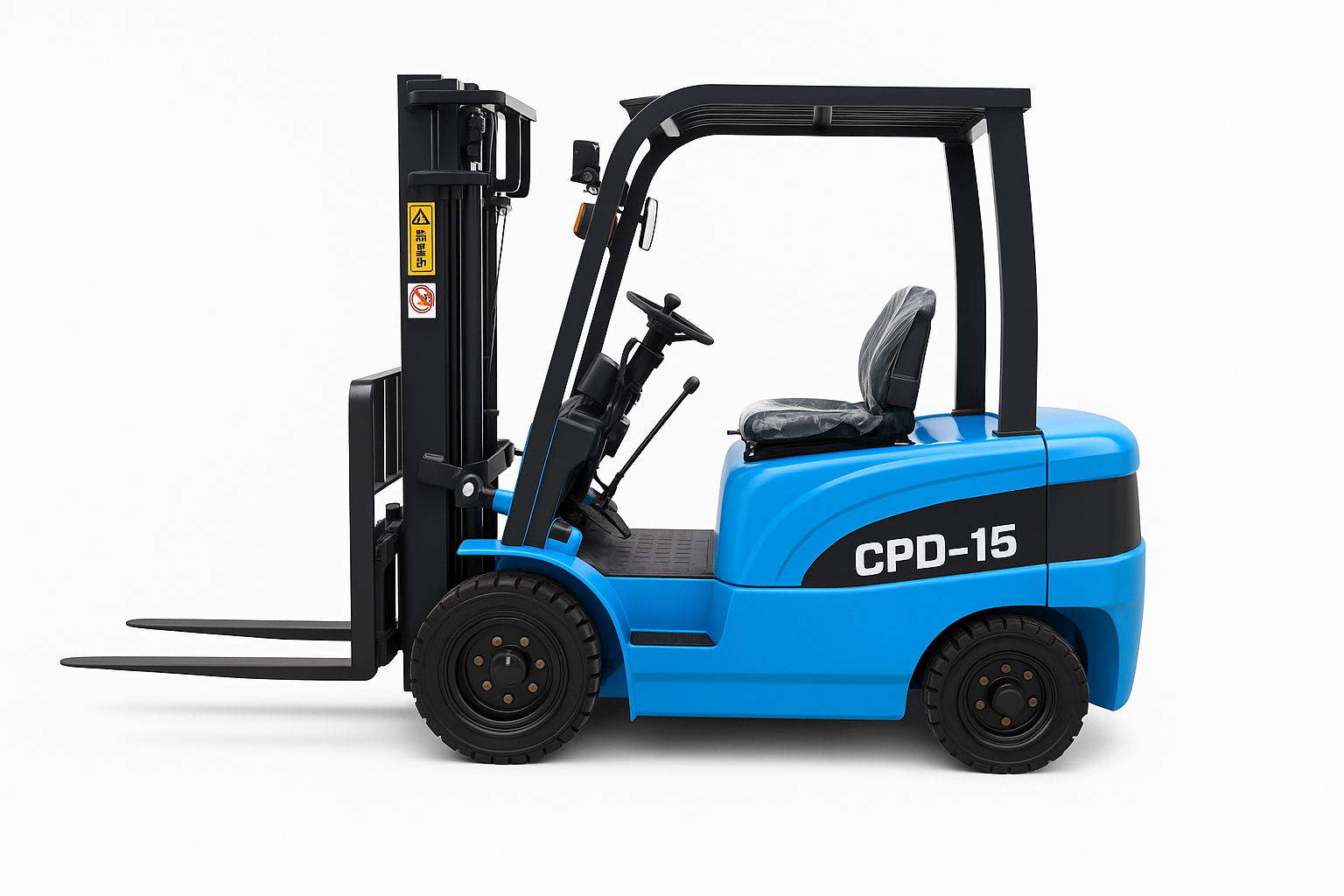
Why Electric Wins in Modern Warehouses
Indoor safety is a huge factor. No fumes. No noise. No fuel spills. If your warehouse handles food, pharmaceuticals, electronics, or retail goods—electric forklifts are the standard.
Operator Experience
This part is often overlooked. When operators test a Voltruk electric forklift, they’re shocked by:
- how smooth the throttle feels
- how stable the counterbalance is
- how easy it is to maneuver in narrow aisles
Happier operators = fewer accidents + less turnover.
Lifetime Cost Advantage
I run a simple equation when I help buyers estimate ROI:
Total Cost of Ownership = Purchase Cost + Maintenance + Energy + DowntimeElectric almost always comes out cheaper across 5–7 years.
Do material handlers drive forklifts?
Yes. Many material handlers are trained and certified to operate forklifts as part of their daily workflow.
In many warehouses I visit, the material handler role and forklift operator role overlap. Some receive training on-site. Others need third‑party certification depending on national regulations.

Why Companies Cross‑Train Material Handlers
Cross‑training solves staffing problems. When order volume spikes, material handlers who can switch to forklift duty keep the workflow moving.
Safety Matters More Than Job Titles
The critical part is safety. Electric forklifts reduce risks because of:
- zero tailpipe emissions
- stable acceleration
- automatic speed reduction during turns
- regeneration braking
Forklifts are powerful machines, and training is non-negotiable.
Conclusion
If you're choosing between diesel and electric forklifts, here's my honest opinion after years of testing equipment and supporting distributors worldwide:
Electric forklifts are the future of indoor material handling.
Better air quality, quieter warehouses, lower operation cost, stable AC drive systems—and 1‑unit MOQ with Voltruk means you can test the market easily.
When you're ready, I can help you with:
- Get wholesale quote
- Request OEM samples
- Download temperature chart PDF
- Visit the LA warehouse
- Email Frank (info@voltruk.com)
FAQ
Q1: Are electric forklifts good for cold storage?
A1: Yes. Lithium batteries with cold‑storage options work well in –20°C environments. Voltruk provides low‑temperature battery packs and controllers.
Q2: How long does a lithium forklift battery last?
A2: Around 2,000–3,500 cycles depending on usage. Most warehouses get 5–7 years of stable runtime.
Q3: Can electric forklifts work outdoors?
A3: They can, but diesel is still better for muddy, uneven, or construction-type surfaces.
Q4: What is the average charging time?
A4: 2–3 hours for a full charge; opportunity charging allows quick boosts during breaks.
Q5: Are electric forklifts more expensive?
A5: Higher upfront cost, but much cheaper across the lifetime due to lower energy and maintenance costs.
Q6: Do I need certification to operate an electric forklift?
A6: Yes. Most regions require forklift safety training regardless of model type.
Q7: Does Voltruk support OEM?
A7: Absolutely. Custom colors, logos, forks, chargers, and lithium battery brands are available.
Q8: What are typical applications of electric forklifts?
A8: Warehouses, retail distribution, cold storage, manufacturing lines, and logistics hubs.
Q9: What is the warranty on electric forklifts?
A9: Voltruk offers one‑year whole machine warranty and 18–24 months for lithium batteries.
Q10: Can I mix forklifts and pallet trucks in one container?
A10: Yes. You can combine electric forklifts, pallet trucks, stackers, and reach trucks to reduce shipping cost.