A failing forklift battery doesn’t always die suddenly—most problems start quietly with weak power, heating, or shorter runtime. I’ve seen dealers misdiagnose batteries simply because the early warning signs were ignored.
You can tell a forklift battery is bad by checking for reduced runtime, voltage drop, overheating, swelling, corrosion, leakage, slow lifting, or BMS error codes.
These symptoms indicate the battery can no longer hold stable charge or deliver safe power.
Years ago, a customer sent me a forklift that “lost power randomly.”
The actual issue? A swollen battery cell hidden under dust.
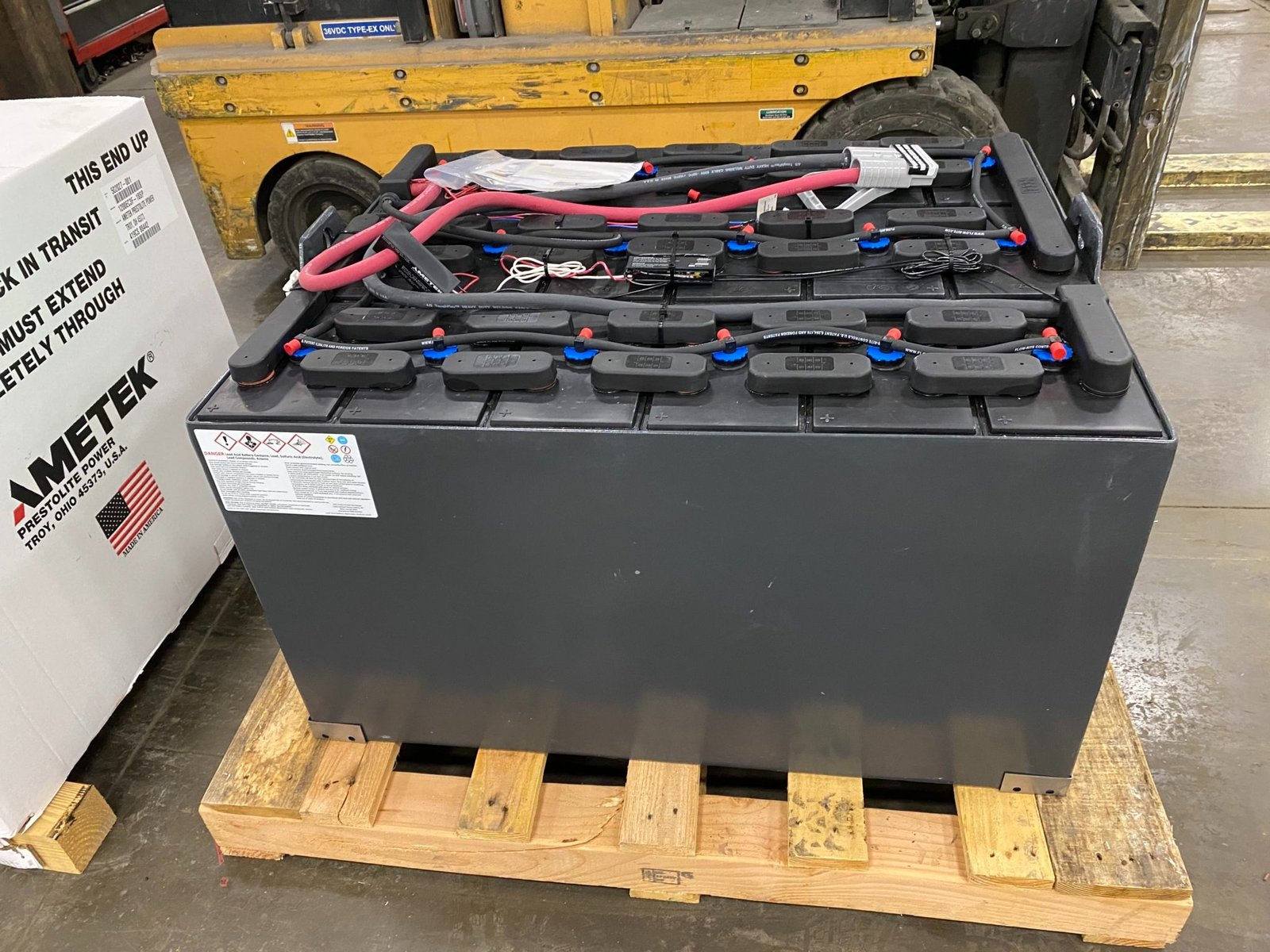
H2-1: What Are the Common Signs of a Failing Forklift Battery?
Common signs include shorter runtime, weak acceleration, overheating, slow lifting, strange smells, swelling, and visible corrosion.
Batteries fail gradually. Before they die completely, they show multiple performance symptoms.
H3-1.1: Reduced runtime and rapid voltage drop
- Short runtime = increased internal resistance
- Sharp voltage drop during lifting = early degradation
H3-1.2: Weak acceleration and slower lifting
- Battery cannot deliver required current
- Mast movement becomes sluggish
H3-1.3: Overheating, odor, or unusual noise
- Heat = cell imbalance or chemical stress
- Burning smell or gassing = immediate danger
H2-2: Physical Signs That Indicate a Battery Is Going Bad
These include swelling, corrosion, leakage, cracks, and discoloration.
H3-2.1: Swollen or bulging battery cases
Swelling = internal gas buildup
- Lithium swelling = dangerous
- Lead-acid bulging = overcharge or plate warping
H4-2.1.1: Why swelling is dangerous
- Risk of rupture
- Risk of thermal event
- Must stop immediately
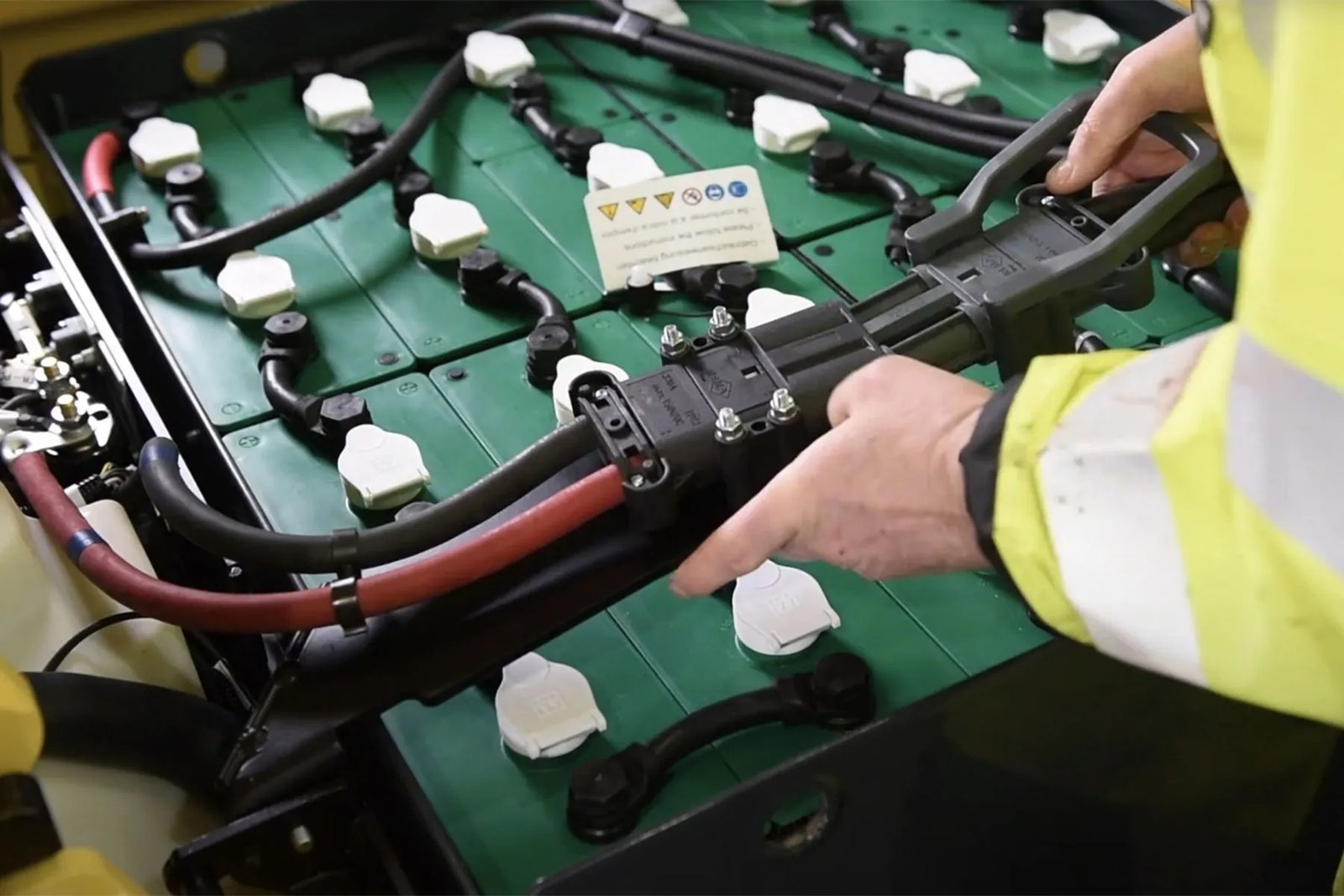
H3-2.2: Corroded terminals, rust, and acid residue
- White or green powder = corrosion
- Increases resistance → weak power
- Can damage controllers
H3-2.3: Leakage, cracks, or electrolyte stains
- Lead-acid leaks are hazardous
- Lithium leaks = rare but serious
H4-2.3.1: Cleaning steps to confirm leakage
- Wear PPE
- Apply baking soda
- Wipe gently
- Check again after 24 hrs
H2-3: How to Diagnose a Bad Forklift Battery Using Performance Tests
Diagnostic tests include voltage test, load test, temperature test, and BMS readings.
H3-3.1: Voltage check under load
- Instant voltage collapse = failed cells
-
0.1V imbalance (lead-acid) = sulfation
H3-3.2: Capacity test through runtime
- 30–50% runtime drop = near end-of-life
H3-3.3: Temperature readings and hotspots
- Hotspots = internal imbalance
H4-3.3.1: Replace immediately if:
- Voltage collapses
- Surface temp >60°C
- Cell imbalance >0.2V
- Swelling visible
H2-4: How Lithium Forklift Batteries Show Failure Signs
Lithium packs fail through imbalance, overheating, swelling, or BMS shutoff.
H3-4.1: BMS warnings and cell imbalance
Common BMS alerts:
- Over-voltage
- Under-voltage
- Over-temperature
- Cell imbalance
H4-4.1.1: What imbalance means
One cell dropping faster → pack instability.
H3-4.2: Overheating under light load
- Early sign of resistance increase
H3-4.3: Swelling or deformation
- Stop operation immediately
H2-5: How Lead-Acid Forklift Batteries Show Failure Signs
Lead-acid batteries fail through low electrolyte, sulfation, corrosion, heat, or overcharging.
H3-5.1: Low electrolyte and exposed plates
- Exposed plates = permanent damage
H3-5.2: Sulfation and incomplete charging
- Causes weak power + slow charging
H4-5.2.1: Visual signs of sulfation
- Gray crystals
- Stratification
- Slow bubbling
H3-5.3: Excessive gassing or acid smell
- Indicates overcharging or plate decay
H2-6: When to Repair vs Replace a Forklift Battery
H3-6.1: Repair is possible when:
- Loose terminals
- Dirty connectors
- Mild sulfation
- Corrosion
H3-6.2: Replacement required when:
- Swelling
- Leakage
- Severe imbalance
- Voltage collapse
- Multiple bad cells
H3-6.3: Repair vs replacement cost
| Type | Cost |
|---|---|
| Repair | $30–$120 |
| Lead-acid replacement | $600–$1,200 |
| Lithium replacement | $900–$1,800 |
H4-6.3.1: Avoid false “repairable” assessments
Swelling = always replacement.
H2-7: How Voltruk Helps Customers Diagnose Battery Problems
Voltruk provides:
H3-7.1: QC checks before shipment
- BMS screenshot
- Cycle test
- Vibration test
- Photo QC
H3-7.2: Remote diagnostic support
- Voltage curves
- BMS data
- Troubleshooting training
H3-7.3: LA warehouse spare parts + credit policy
- Fast shipping
- Easy replacement
- Photo → credit system
Conclusion
Detecting a bad forklift battery is simple when you understand early symptoms:
runtime loss, voltage drop, heat, swelling, corrosion, leakage, or BMS warnings.
Catching problems early protects motors, reduces downtime, and extends battery life.
Voltruk supports global buyers with stable lithium systems, QC reports, and fast after-sales service.
Next Steps (CTA)
👉 Get wholesale quote
👉 Request OEM samples
👉 Download temperature chart PDF
👉 Visit LA warehouse
👉 Email Frank: info@voltruk.com
FAQ (10 Q&As)
Q1: What is the most common sign of a bad forklift battery?
Short runtime and rapid voltage drop.
Q2: Why does a forklift lose power even when charged?
High internal resistance causes voltage collapse.
Q3: Is battery swelling dangerous?
Yes—stop immediately.
Q4: Can lead-acid batteries be repaired?
Minor issues yes, but leaks/sulfation usually require replacement.
Q5: What tools detect battery failure?
Load tester, BMS app, IR thermometer, voltmeter.
Q6: Why does a forklift battery overheat?
Imbalance, high resistance, or charger issues.
Q7: Can a bad battery damage forklift components?
Yes—motors and controllers are affected.
Q8: How often should batteries be inspected?
Daily visual checks + monthly deep inspection.
Q9: Should lithium batteries corrode?
No—corrosion indicates external issues.
Q10: Does Voltruk help with diagnostics?
Yes—we provide BMS support, QC reports, and troubleshooting assistance.