Warehouses are tighter, labor is expensive, and SKU turnover is faster than ever. I get the same question from buyers every week: “Frank, how do we pick the right stacker?”
Behind that question is cost, risk, and operational design.
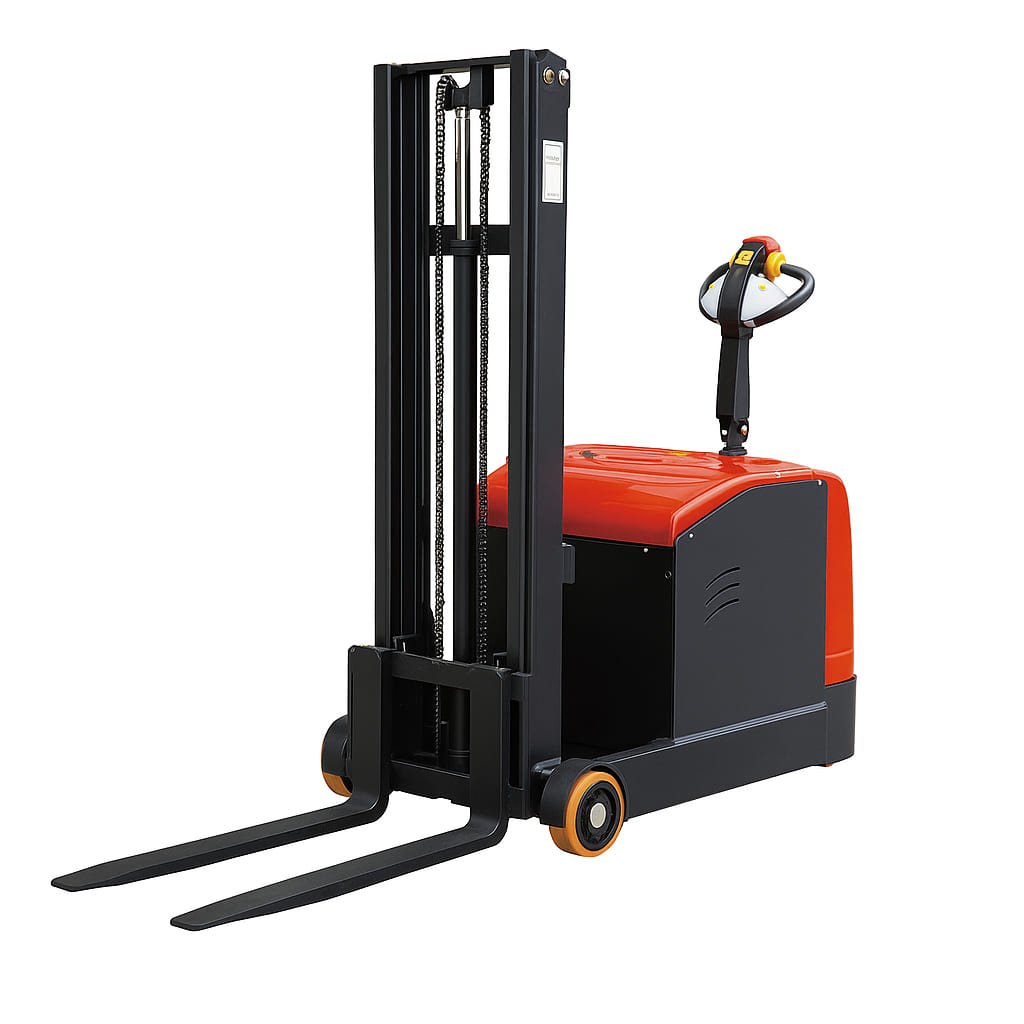
Companies choose electric stackers based on cost, safety, aisle width, lift height, workload, battery type, and supplier capability.
The right model depends on real warehouse conditions—not catalog specs.
My first overseas stacker project was more than a decade ago. The customer flew in, tried four models, and rejected all of them because his aisle was 30 cm narrower than expected. That day taught me: never recommend a stacker until you understand the site.
Understanding Why Companies Switch to Electric Stackers
Companies switch to electric stackers to reduce long-term cost, improve safety, and maximize warehouse space.
Electric stackers are no longer “budget alternatives”—they’re core equipment in modern warehouses.
Rising labor costs, tighter layouts, and safety requirements push companies toward electric handling solutions.
👉 OSHA powered industrial truck safety guidance:
https://www.osha.gov/powered-industrial-trucks
Cost Savings and Total Cost of Ownership (TCO)
Today’s decisions are driven by TCO (total cost of ownership)—not purchase price.
Over the past five years, almost all of my European and North American clients have shifted from lead-acid to lithium because the math is simple:
- 2–3 hr fast charging
- Zero maintenance
- 2500+ cycles
- No water refills
- Higher uptime
This alone saves companies thousands per year across labor, space, and maintenance.
How lithium-ion reduces long-term costs
A German customer of mine used to replace lead-acid batteries twice a year. After switching to lithium, two years passed without a single issue.
👉 UL official lithium battery safety resources:
https://ul.org/resources/battery-safety-resources
Walkie vs stand-on stacker (TCO impact)
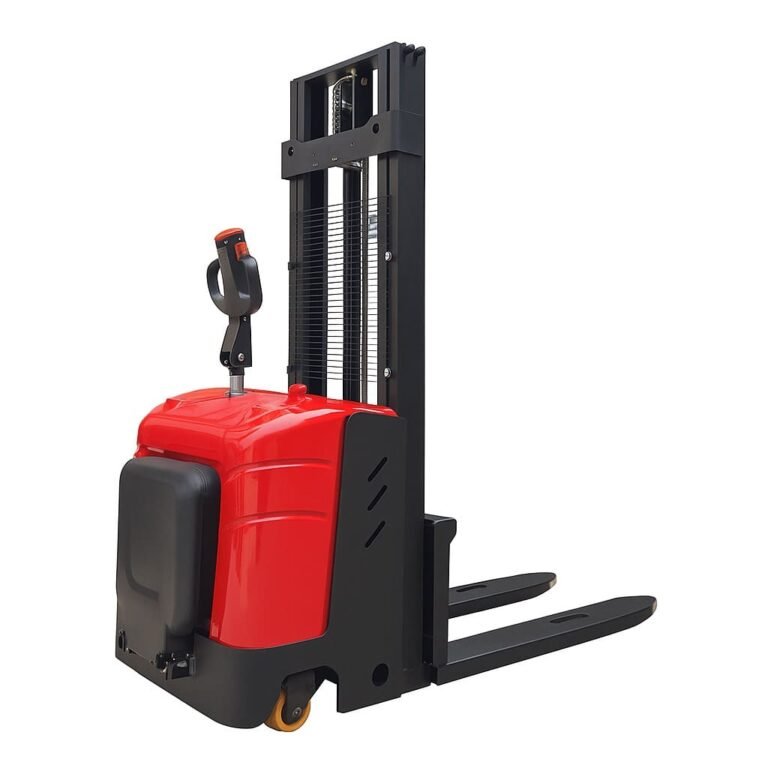
Walkies are cheap upfront but expensive in labor. Operators walk 10–12 km per shift.
Stand-on models reduce:
- operator fatigue
- travel time
- handling delays
For multi-shift operations, the ROI is very clear.

Safety, Compliance, and Labor Productivity
Modern warehouses prioritize safety because one incident can shut down an operation.
Common safety features companies now require
- Regenerative braking
- Anti-rollback
- Speed limiting
- Emergency stop
- Operator Presence System (OPS)
👉 CDC / NIOSH forklift safety:
https://www.cdc.gov/niosh/topics/poweredindustrialtrucks/
Why operators prefer electric stackers
Manual stackers seem economical, but operators dislike them for heavy loads or high racks. Electric stackers deliver:
- smoother lifting
- steadier loads
- better ergonomics
- faster work cycles
A US 3PL client told me after upgrading:
“Frank, complaints from operators dropped by half.”
Key Operational Factors Companies Evaluate
Companies choose stackers by evaluating:
- load capacity
- pallet type
- aisle width
- lift height
- daily workload
- travel routes
If you get these right, you’re 80% of the way to choosing correctly.
Load capacity, pallet type & duty cycle
Many buyers underestimate actual loads. A pallet “about 1000 kg” often hits 1400 kg in daily use.
Typical recommended capacities
| Industry | Recommended Capacity |
|---|---|
| Retail / E-commerce | 1.0–1.2T |
| General warehouses | 1.5–2.0T |
| Manufacturing | 2.0T |
| Beverage & cold chain | 2.0T |
Pallet size & structure affect stacker choice
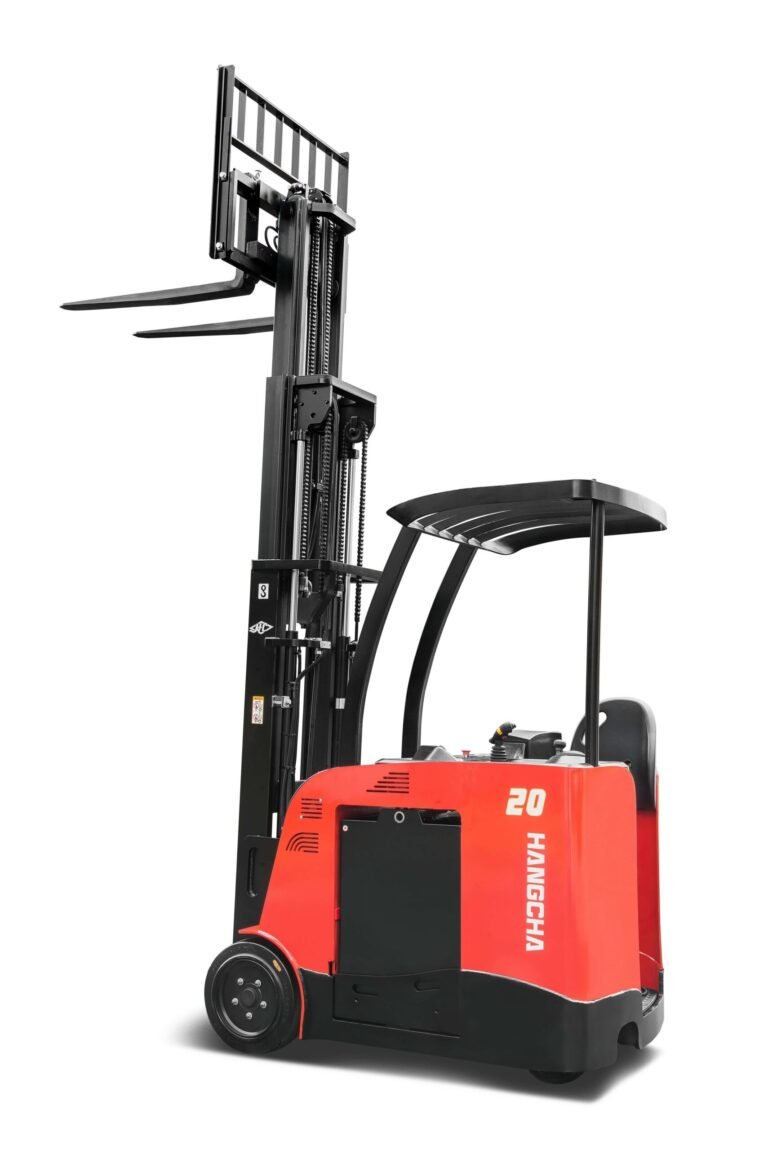
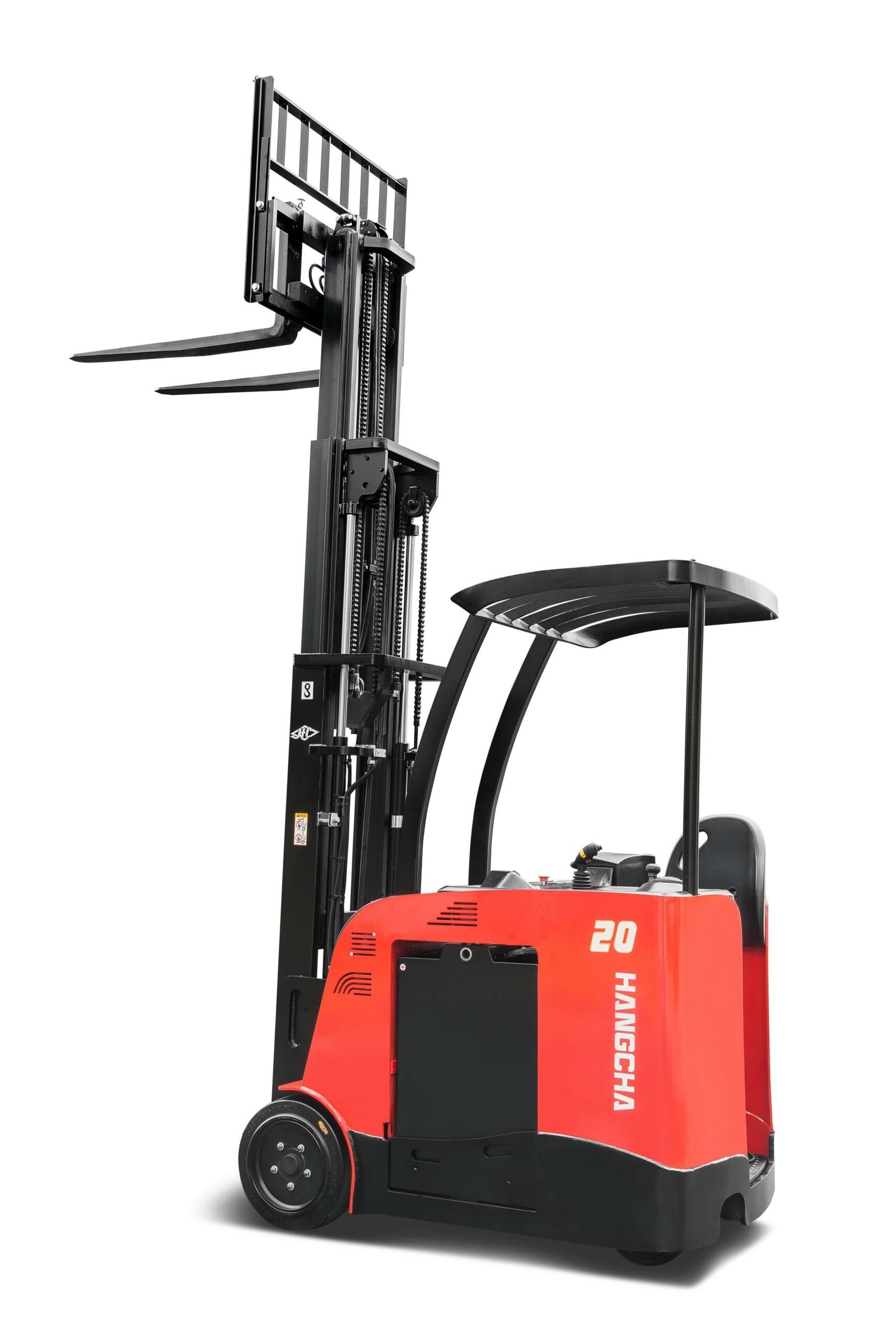
- Non-entry pallets → counterbalance stacker
- Narrow pallets (<800 mm) → customized fork spacing
- Low-bottom pallets (<90 mm) → low-profile forks
Aisle width, layout, and lift height
A stacker’s turning radius dictates your warehouse layout.
Standard aisle width benchmarks
- Walkie stacker: 2.0–2.2 m
- Stand-on stacker: 2.3–2.5 m
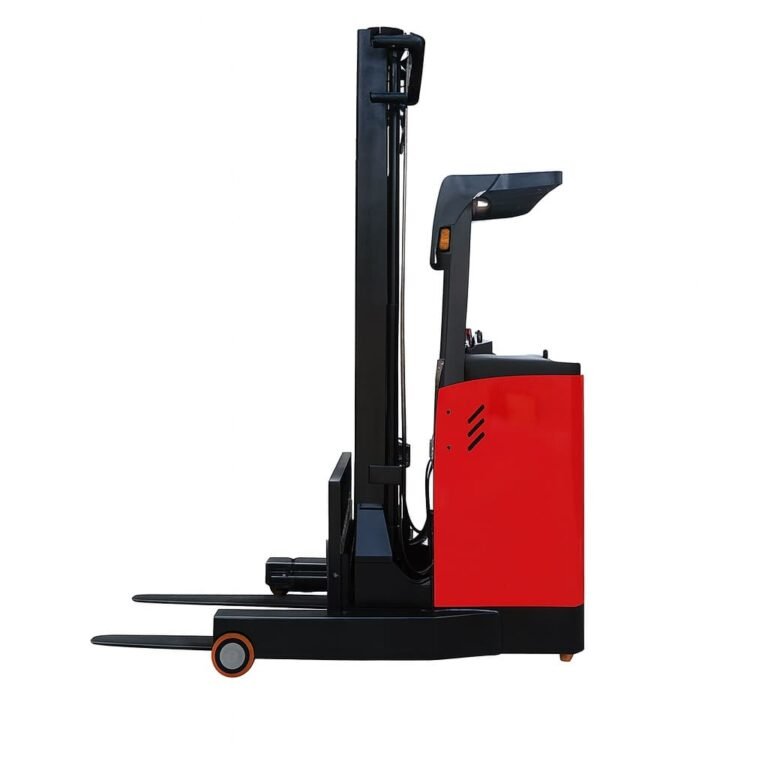
- Reach truck: 2.7–3.0 m
Reducing aisle width by 20–30 cm increases storage capacity by 8–12%.
Calculating lift height
Rack Height + 300 mm safety margin = Required Lift Height
👉 FEM official handling equipment design guidelines:
https://www.fem-eur.com/
Comparing Battery Technologies & Power Systems
Most companies choose lithium-ion for:
- fast charging
- long lifespan
- cold room performance
- zero maintenance
Lithium vs Lead-Acid
Lithium (LFP) offers:
- 2–3 hr fast charge
- 2500–4000 cycles
- stable at −20°C
- opportunity charging
- no acid fumes
Lead-acid fits budget buyers but costs more long-term.
How to evaluate BMS protections
Look for:
- overheat protection
- low-temperature protection
- current limiting
- cell balancing
- stable CAN communication
👉 IEC battery safety standards:
https://www.iec.ch/dyn/www/f?p=103:46:0
AC Drive Motor & Controller Considerations
AC motors:
- resist dust
- require no brushes
- rarely fail
Factory tests (what buyers should expect)
- Load tests
- Slope tests (6–8°)
- Waterproofing
- Controller heat tests
- Vibration tests
Controller tuning determines:
- acceleration smoothness
- braking predictability
- slope performance
- emergency stop stability
How Companies Evaluate Manufacturers & Suppliers
Buying a stacker = buying the factory behind it.
QC tests customers expect
- Mast drop/deflection tests
- Full-load vibration
- Fork bending
- Controller heat cycles
- Cold-room simulation
“If you received it in good condition, it’s because we stressed it first.”
OEM lead time & spare parts
- Standard: 15–20 days
- OEM color: 20–25 days
- Cold room: +3–5 days
- LA warehouse stock: same-day dispatch
After-sales support: photo → credit system
Photo/video → Engineer confirmation → Parts → Credit (if needed)
Real-World Industry Use Cases
Logistics, 3PL, and E-commerce
High-turnover operations prefer stand-on stackers for:
- fast entry/exit
- narrow-aisle travel
- multi-shift support
Manufacturing, Food, & Cold Storage
Manufacturers often require:
- 2.0T heavy-duty stackers
- reinforced forks
- thick masts
- industrial wheels
Cold rooms require:
- low-temperature lithium
- waterproof harnessing
- stainless-steel options
👉 FDA cold storage guidance:
https://www.fda.gov/food
👉 USDA food facility resources:
https://www.usda.gov/topics/food-and-nutrition
My Field Checklist (How I Guide Buyers)
Operational questions
- Daily pallet count
- Pallet size
- Oversized goods?
- Travel routes?
- Operator consistency?
Battery & charging schedule
- Number of shifts
- Break windows
- Opportunity charging needs
For multi-shift, lithium is the only logical choice.
Common Mistakes Companies Make
Underestimating aisle width & mast deflection
“Catalog aisle width” ≠ real aisle width.
Ignoring long-term serviceability
Ask suppliers:
- Do you stock motors and controllers?
- Do you have manuals/videos?
- How fast can you respond?
If they hesitate—walk away.
Conclusion
There is no universal “best stacker”—only the best match for your aisles, pallets, shifts, and warehouse strategy.
Voltruk offers:
- Factory-direct supply
- 1-unit MOQ
- 15–25 day delivery
- OEM color/logo
- LA warehouse stock
- Full after-sales support
📧 info@voltruk.com
🌐 https://www.voltruk.com
Get Started
- Get wholesale quote
- Request OEM samples
- Download temperature chart PDF
- Visit our LA warehouse
FAQ (10 Q&As)
Q1: What lift height do most warehouses need?
Most warehouses use 3–4.5 m racks, so a 4.5–5.0 m mast works. Add 300 mm for safety.
Q2: Is a lithium-ion stacker worth the extra money?
Yes—especially for daily or multi-shift operations.
Q3: How do I know if I need a stand-on stacker?
If operators walk 30–40 m per cycle, a stand-on model boosts productivity.
Q4: Which pallets require special stackers?
- Non-entry pallets → counterbalance/leg-free models
- Narrow pallets (<800 mm) → custom fork spacing
- Low-bottom pallets → low-profile forks
Q5: Can electric stackers be used outdoors?
Yes—but only on smooth concrete. Rough ground requires reinforced wheels and stronger motors.
Q6: How long does shipping take?
- Standard: 15–25 days
- OEM color: +5–7 days
- LA stock: same-day
Q7: Do operators need a license?
Walkie stackers: usually no.
Stand-on: may require certification (OSHA dependent).
Q8: What is the maintenance schedule?
Lithium stackers require minimal service every 3–6 months.
Q9: How do I choose the right battery size?
Consider daily hours + break times + shifts.
Long shifts → bigger Ah or opportunity charging.
Q10: Do you support OEM customization?
Yes—colors, logos, packaging, mast heights, cold-room options, and fleet numbering.