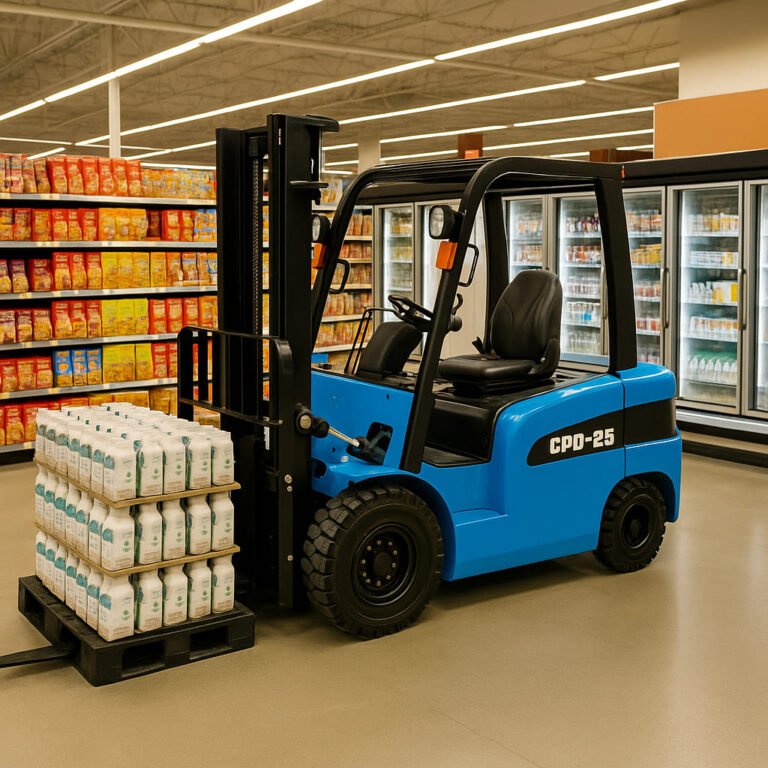
Electric forklifts don’t all use the same number of batteries—and this is exactly why so many dealers ask me this question. The wrong answer leads to short runtime, overheating, or unexpected downtime. So let’s make it simple.
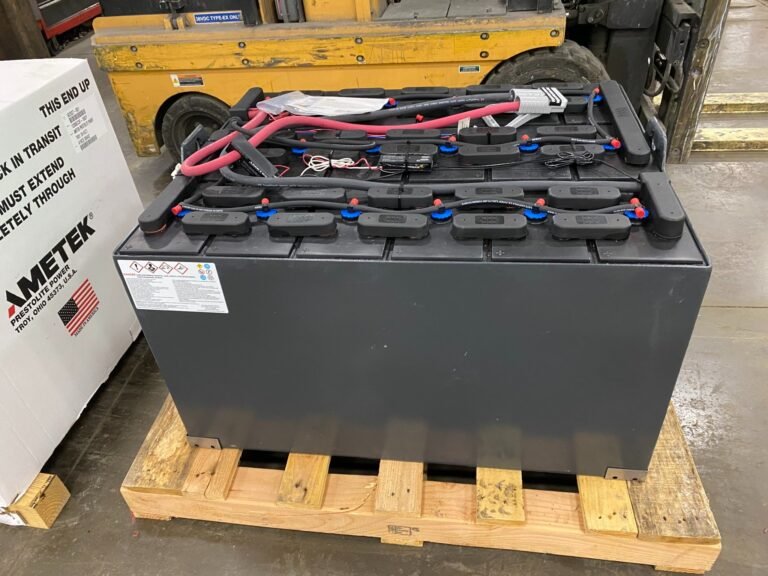
Most electric forklifts only use one battery pack, especially modern lithium models (48V single-pack). Some older or heavy-duty lead-acid forklifts use two batteries wired together for higher capacity. Warehouse equipment like pallet trucks and stackers typically run on a single 24V or 48V pack. The exact number depends on voltage, capacity, and model design.
I’ll walk you through how I help distributors and end users size the right battery count—from pallet trucks to 3.5T counterbalance forklifts—using real cases from the field.
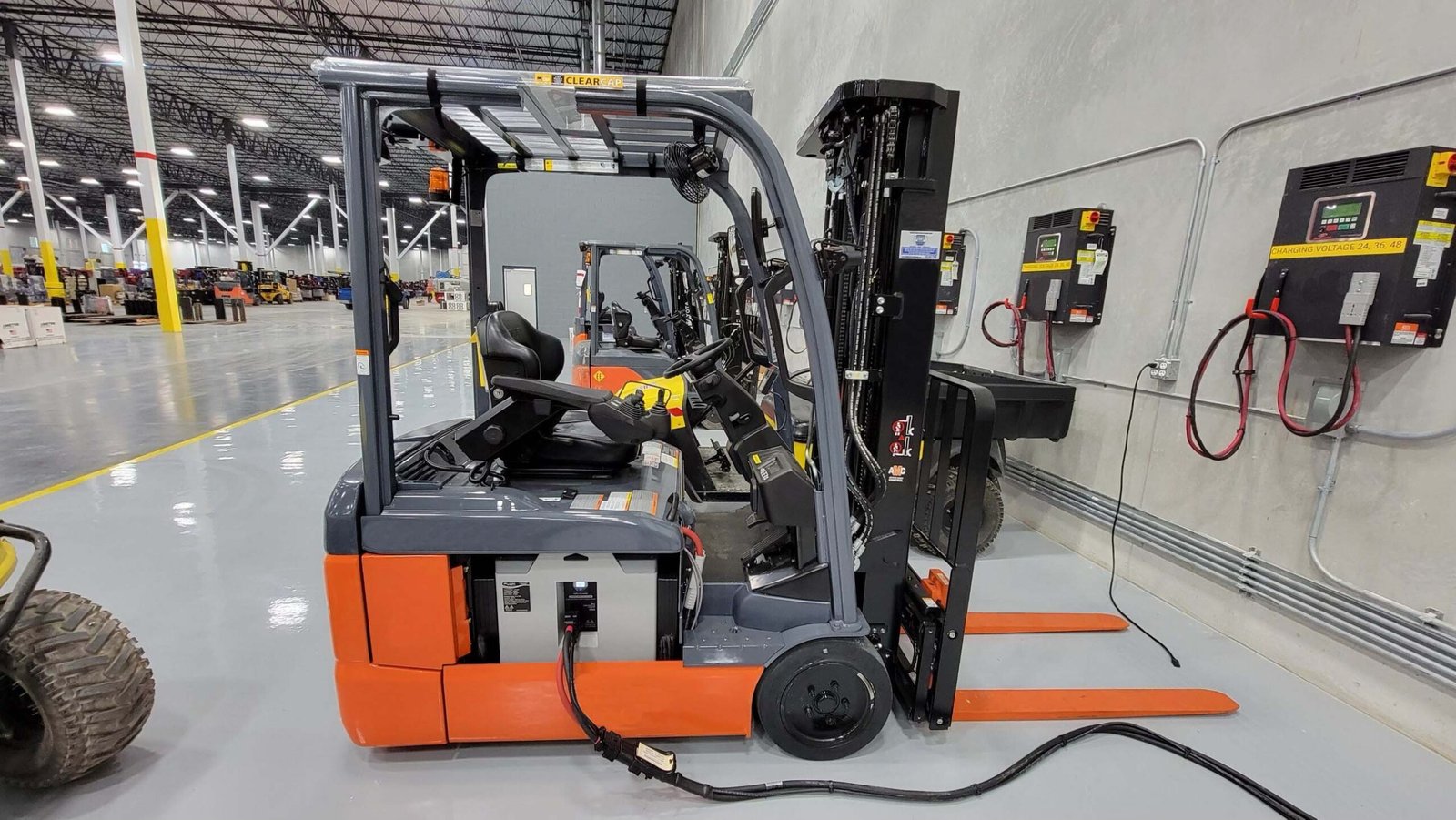
Why Electric Forklifts Have Different Battery Quantities
Forklifts have different battery quantities because each model requires a specific voltage platform and energy capacity. Lithium systems consolidate energy into a single pack, while older lead-acid designs often use multiple batteries to reach the same voltage or runtime.
A forklift’s battery system is its “engine.”
So when someone asks me “How many batteries does this forklift have?” I immediately look at three things:
- Voltage
- Capacity
- Design era
Modern lithium systems from CATL, EVE, and Gotion use high-density cells. That allows us to fit more power into a single, compact pack.
But older lead-acid configurations sometimes use two small batteries connected together.
I still see this when I audit rental fleets in the Middle East or Africa—two tired 24V lead-acid batteries propping up an old 48V forklift.
Lithium simplifies everything:
- One pack
- Higher output
- Lower maintenance
- More consistent runtime
Factors that Change the Number of Batteries
Different forklift classes demand different voltage platforms.
Below 2 tons → 24V or 48V
2–3.5 tons → 48V standard
Application also matters:
- Multi-shift → larger capacity or dual-pack lead-acid
- Cold storage → high energy density
- Rental → single lithium pack preferred
Example:
A rental client in Mexico replaced dual lead-acid with one CATL lithium pack. Runtime increased dramatically.
Differences Between Lithium and Lead-Acid Battery Systems
| Type | Typical Battery Count | Voltage Range | Runtime | Maintenance |
|---|---|---|---|---|
| Lithium | 1 pack | 24V / 48V | Long | Maintenance-free |
| Lead-acid | 1–2 batteries | 24V / 48V | Short-medium | Watering, cleaning |
Voltage Platforms (24V/48V/80V)
- 24V systems → pallet trucks, stackers
- 48V systems → 1.5–3.5T forklifts
- 80V systems → 5–8T machines, sometimes multi-pack
Most Voltruk models (1.5–3.5T) use one 48V lithium pack.
Capacity Requirements (1.5T–3.5T)
| Load Range | Capacity |
|---|---|
| 1.5–2T | 48V 160–200Ah |
| 2.5–3T | 48V 200–300Ah |
| 3.5T | 48V 300–350Ah |
Higher load = larger capacity, not more batteries.
Standard Battery Configurations by Forklift Type
Pallet trucks and stackers usually use a single 24V or 48V pack, while counterbalance forklifts use a larger 48V pack (200–350Ah). Only older or heavy-duty machines use dual-battery setups.
Class III Warehouse Equipment (Pallet Trucks & Stackers)
Always single-pack systems.
Typical specs:
- Pallet truck → 24V / 60–100Ah
- Stacker → 24V / 80–120Ah or 48V / 60–100Ah
The 2T double lifting stacker you shared uses one 48V battery.
Counterbalance Electric Forklifts (1.5–3.5T)
Older forklifts sometimes used two 24V lead-acid batteries.
Voltruk’s CPD20–CPD35 uses one 48V lithium pack.
48V Lithium Pack Architecture
- BMS
- CATL/EVE/Gotion cells
- Cooling plate
- Fast-charging port
When Dual-Pack Systems Are Used
- Legacy lead-acid trucks
- High peak current
- Old fleets not ready for lithium
For new forklifts: single lithium pack is standard.
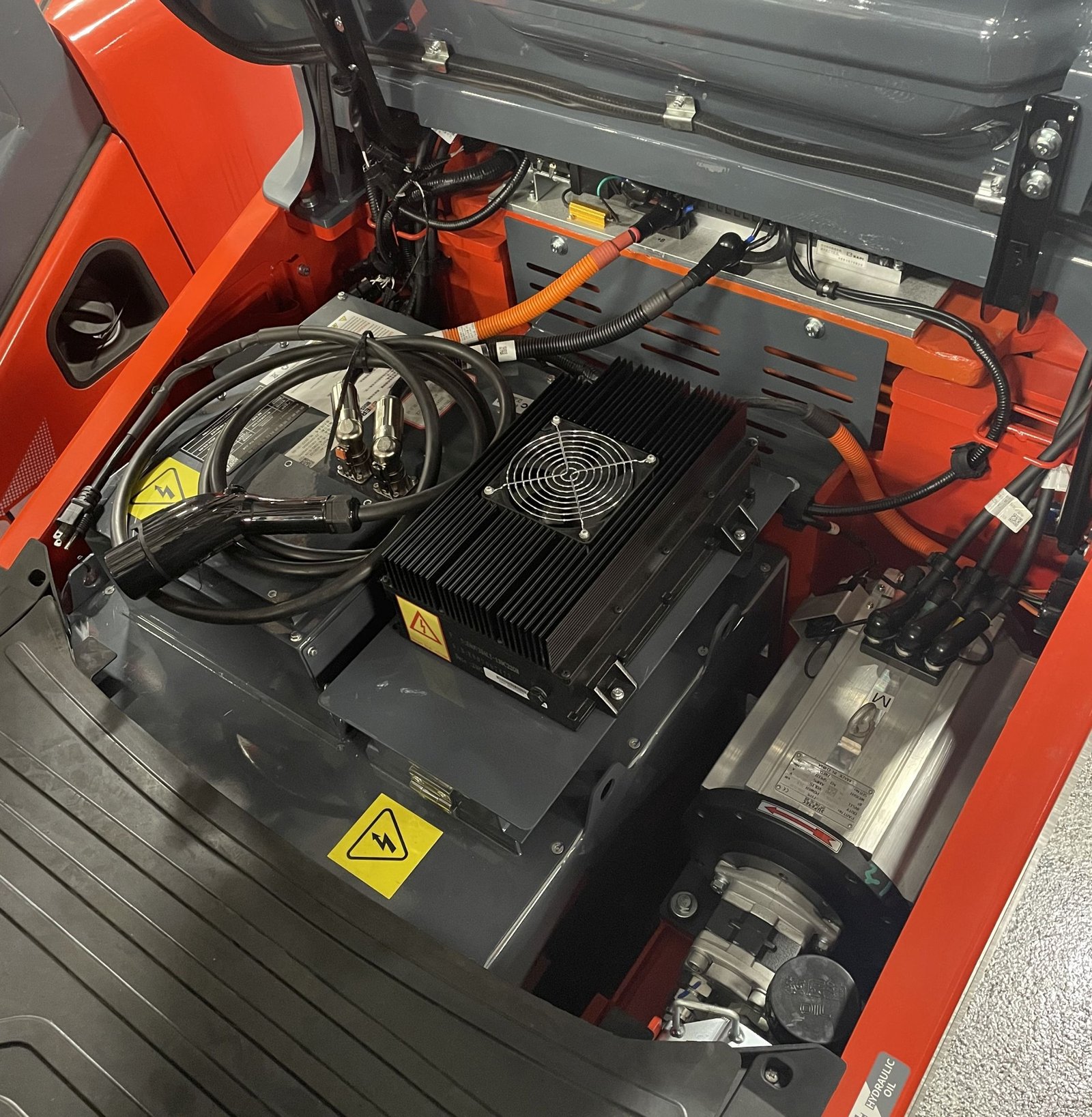
How to Identify How Many Batteries Your Forklift Needs
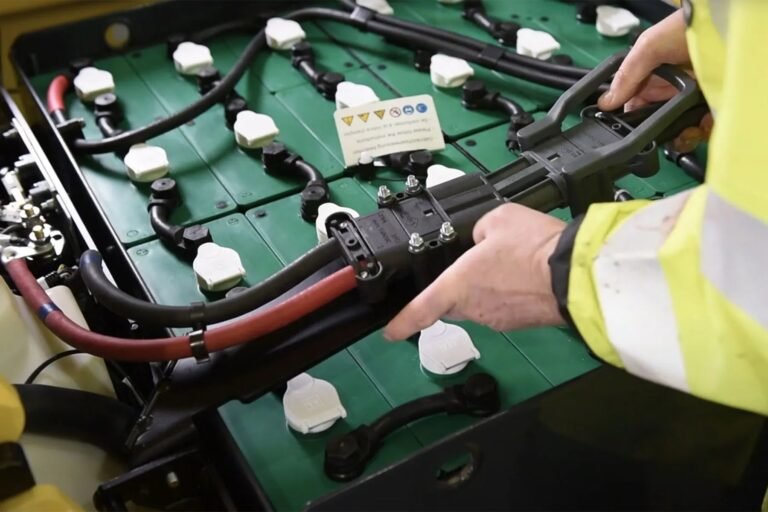
Check the forklift’s voltage plate, cable layout, and battery compartment. A single connector usually indicates one battery pack; two connectors or bridging cables indicate a dual-battery configuration.
Quick Inspection Checklist
- Check data plate (24V / 48V)
- Count connectors (1 = single pack)
- Look for jumper cables
- Measure compartment size
- Identify chemistry
Matching OEM Specs vs After-Market Replacements
Common issues I see in used forklifts:
- Two 24V batteries used instead of one 48V
- Wrong connectors
- Too-small capacity → overheating
Risks of Incorrect Battery Configurations
- Voltage sag
- Motor overheating
- Reduced runtime
- BMS shutdown
Lithium Upgrade Conversions
90% of lithium upgrades involve removing two lead-acid batteries and installing one lithium pack.
Single-Pack vs Dual-Pack: Which Is Better?
Snippet (≤50 words):
Single lithium packs offer better efficiency, safety, and runtime, while dual lead-acid systems are cheaper but require more maintenance and downtime.
Pros & Cons: Single Lithium Pack
Pros:
- Maintenance-free
- Faster charging
- Longer lifespan
- Stable voltage
- Higher energy density
Cons:
- Higher initial cost
Pros & Cons: Dual Lead-Acid
Pros:
- Lower purchase cost
- Compatible with old forklifts
Cons:
- Watering + cleaning
- Voltage drop
- Short lifespan
Performance in Heavy-Duty Conditions
Lithium outperforms lead-acid in all multi-shift environments.
Cost Comparison (TCO)
Lithium reduces total cost by 35–60% over four years.
Real-World Examples: Battery Count in Voltruk Equipment
Voltruk pallet trucks and stackers use single 24V–48V packs, while our 1.5–3.5T electric forklifts use a single 48V lithium pack (200–350Ah).
2T Pallet Trucks & Stackers
Single 48V pack, 60–100Ah.
3.5T Lithium Forklifts
One 48V 300–350Ah pack.
Special Scenarios
- Cold storage
- Rentals
- Multi-shift logistics
Lithium performs best in all three.
Case Study
A European customer upgraded 12 units → runtime improved 42%.
Buying Guide: How Many Batteries Should You Choose?
Choose one high-capacity lithium battery for most modern forklifts. Only select dual-battery systems if you operate older equipment.
Capacity Planning
- 1 shift → 150–200Ah
- 2–3 shifts → 250–350Ah + fast charging
Charging Strategy
Lithium supports opportunity charging without reducing lifespan.
Dealer Checklist
- Voltage
- Capacity
- Charge time
- Environment
- Load range
Common Buyer Mistakes
Choosing two cheap batteries instead of one high-quality pack.
Maintenance, Safety, and Replacement Guidelines
Battery count affects maintenance routines, voltage checks, and heat management. Single lithium packs require less maintenance and offer stronger safety margins.
How Battery Quantity Affects Maintenance
Dual batteries = double work.
Safety Considerations
More connectors = more risks.
Temperature & Ventilation
- Allow airflow
- Avoid stacking chargers
Early Warning Signs
- Voltage drop
- Swelling
- Runtime loss
Conclusion
The number of batteries in an electric forklift depends on voltage, capacity, and technology. For 95% of modern operations, a single lithium pack is the safest, most efficient choice.
Voltruk offers CE/ISO-certified lithium forklifts with CATL/EVE/Gotion batteries and 15–25-day delivery.
CTAs
- Get wholesale quote
- Request OEM samples
- Download temperature chart PDF
- Email Frank (info@voltruk.com)
- Book a visit to our LA warehouse
FAQ (10 Q&As)
Q1: Do all electric forklifts use only one battery?
A1: No. Most modern forklifts use a single lithium battery pack, but older lead-acid models may use two 24V batteries wired together.
Q2: How long does a lithium battery last?
A2: 3,000+ cycles, typically 5–7 years.
Q3: Can I replace two lead-acid batteries with one lithium pack?
A3: Yes, with matched connectors and compartment.
Q4: What voltage is standard?
A4: 48V for 1.5–3.5T forklifts; 24V for pallet trucks.
Q5: Does more batteries mean more power?
A5: No. Lithium has higher density, so one pack outperforms two lead-acid units.
Q6: How do I know my battery count?
A6: Check voltage plate, connectors, and compartment.
Q7: Are dual-battery forklifts less efficient?
A7: Yes—more heat loss, slower charging, higher maintenance.
Q8: Can I fast-charge lithium?
A8: Yes, during breaks.
Q9: Best battery for a 3.5T forklift?
A9: 48V 300–350Ah lithium pack.
Q10: Does Voltruk offer OEM branding?
A10: Yes—custom color, logo, and packaging.