Choosing the right forklift battery is often harder than choosing the forklift itself—because your daily efficiency, cost, and safety all depend on it.
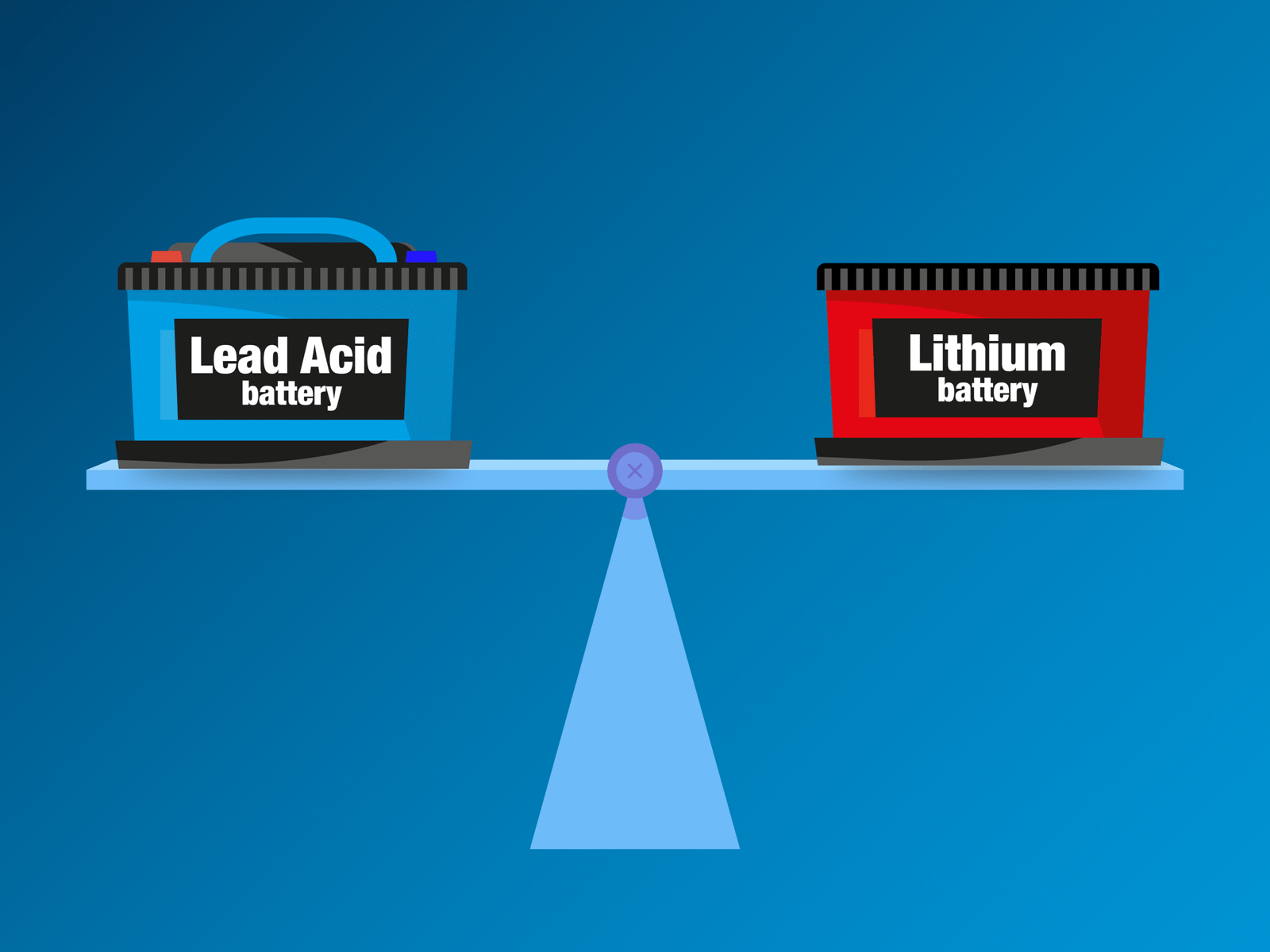
Lithium-ion batteries outperform lead-acid in charging speed, lifespan, safety, and multi-shift productivity. Lead-acid can fit low-budget, single-shift operations, but lithium-ion usually delivers better lifetime value for most warehouses. Years ago, when I helped a customer switch their entire fleet from lead-acid to lithium, it took only three days for their operators to stop complaining about slow charging and battery swaps.
What Are the Core Differences Between Lithium-Ion and Lead-Acid Forklift Batteries?
Lithium-ion batteries deliver higher energy density, faster charging, longer lifespan, and zero maintenance, while lead-acid batteries rely on heavier, slower technology requiring watering and ventilation.
The fundamental differences come from chemistry, energy density, and thermal management. In our factory’s QC process, lithium batteries undergo cycle, thermal, and BMS protection tests, while lead-acid requires electrolyte density checks and plate durability tests.
H3: Chemistry, Energy Density & Weight
- Lithium iron phosphate (LFP) provides 2–3× energy density
- Much lighter, compact, and offers better acceleration
- No memory effect and supports deeper cycles
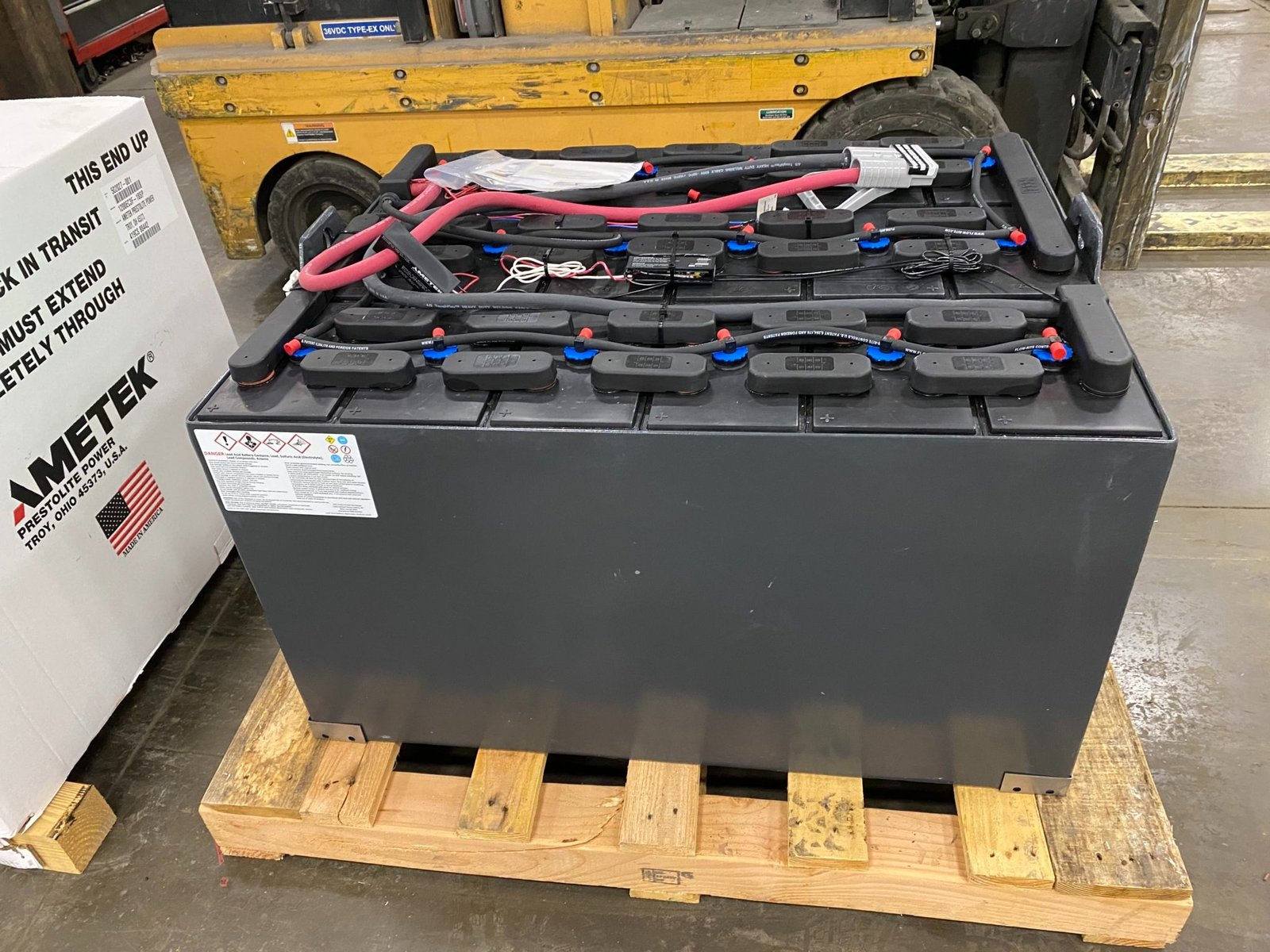
Lead-acid batteries rely on heavy plates and liquid electrolyte, making them slower and high-maintenance.
H3: Charging Behavior & Daily Operation Impact
Lead-acid:
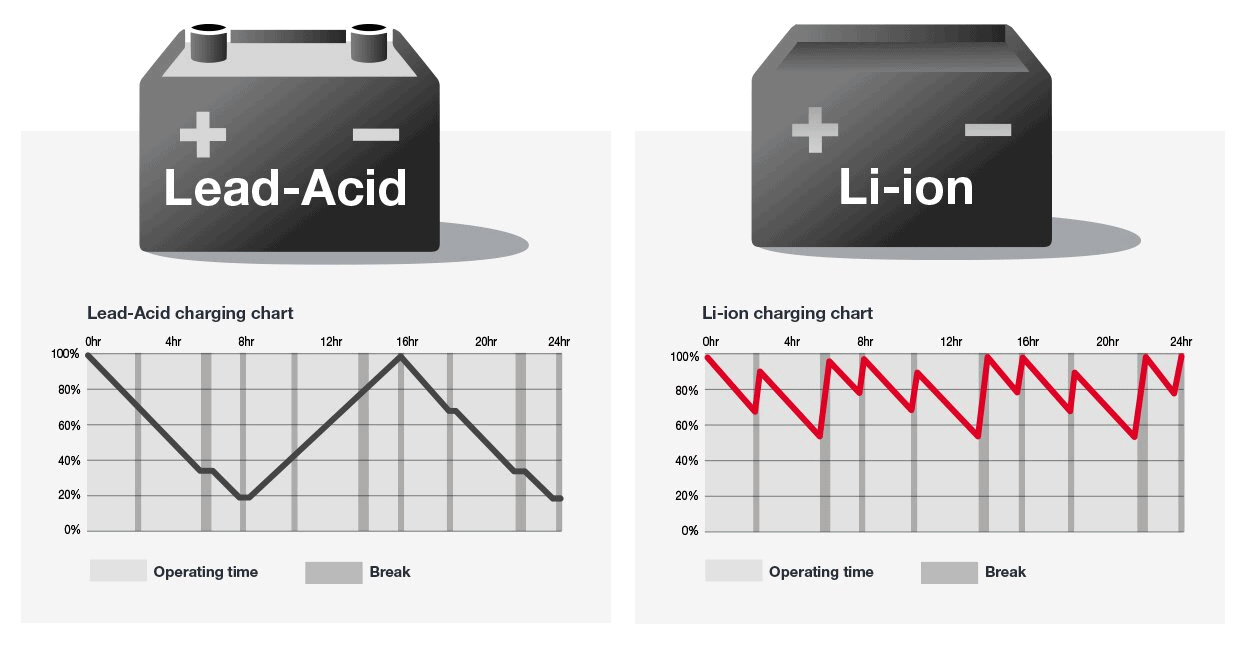
- Requires ventilation during charging
- Needs 2–3 hours of cooling
- Suffers from partial charging
- Requires dedicated charging rooms
Lithium:
- Supports opportunity charging anytime
- 1–2 hour fast charging
- No cooling required
- No battery-room needed
💡 Real case: A Los Angeles customer saved 1.5 hours of downtime per shift by switching to lithium.
H3: Lifespan, Cycle Stability & Heat Management
Cycle comparison:
- Lithium: 2500–4000 cycles
- Lead-acid: 900–1500 cycles
In hot regions like UAE or Saudi Arabia, lithium’s thermal stability offers a large advantage.
How Does Each Battery Type Affect Forklift Productivity?
Lithium-ion significantly boosts productivity with fast charging, longer runtime, and zero maintenance, while lead-acid reduces efficiency due to battery swaps, watering, and cooling delays.
H3: Runtime, Quick Charging, and Multi-Shift Operations
Lithium excels in multi-shift environments:
- 30–40 minutes of charging = hours of runtime
- No cooling time
- No full-cycle charging required
Lead-acid forces downtime due to overheating and slow charging.
H3: Operator Efficiency, Downtime, and Battery Swapping
Example from Chile:
- Operators spent 15 minutes swapping a 900–1100 kg lead-acid battery
- Lithium eliminates all swaps and maintenance
Lithium removes:
- Battery swaps
- Water top-ups
- Acid cleaning
- Cooling time
H3: Impact on Warehouse Layout, Cooling Rooms & Ventilation
Lead-acid requires:
- Ventilated rooms
- Cooling zones
- Acid-resistant flooring
- Safety barriers
Lithium requires:
- Only a standard charging area
This frees up warehouse space and improves safety.
Cost Comparison: Which Battery Saves More Money Over Time?
Lithium-ion costs more upfront but saves more through longer lifespan, lower electricity usage, and zero maintenance—typically reducing total cost by 20–40% over 3–5 years.
H3: Upfront Price vs. Lifetime Cost Formula
Total Cost = Upfront Cost + (Energy × Usage) + Maintenance + Downtime Loss
In multi-shift operations, lead-acid labor/downtime quickly surpass lithium’s initial price.
H3: Maintenance Labor, Watering, and Safety Gear Expenses
Lead-acid requires:
- Electrolyte watering
- Corrosion cleaning
- Ventilation
- Safety equipment
Lithium:
- Zero maintenance
- No gas
- No acid
- No sulfation
H3: Energy Consumption, Charger Efficiency & Electricity Costs
Charging efficiency:
- Lead-acid: 70–80%
- Lithium: 92–98%
H4: “Three-Shift ROI” Example
Lead-acid cycle life: 1000
Lithium cycle life: 3000
With downtime at $35/hour in North America, lithium pays for itself in 18–24 months.
Safety & Reliability: Which Battery Is Safer for Modern Warehouses?
Lithium-ion with BMS protection is safer overall, while lead-acid risks gas emission, acid leaks, overheating, and operator handling errors.
H3: Overheating, Acid Leakage, and Ventilation Requirements
Lead-acid risks include:
- Hydrogen gas
- Acid spills
- Corrosion
- Heat-induced failures
Restricted in food, pharmaceutical, and cold-chain environments.
H3: BMS Protection, Thermal Control & Fast-Charge Safety
Lithium BMS includes:
- Overcharge protection
- Over-discharge protection
- Temperature sensors
- Cell balancing
- Fault diagnosis
H4: Mistakes That Damage Batteries (and How to Avoid Them)
Lead-acid killing mistakes:
- Skipping water
- Wrong charger
- Charging in heat
- Over-discharging
Lithium care:
- Avoid long-term 100% storage
- Keep ports clean
- Use original charger
Which Battery Fits Different Forklift Types & Applications?
Lithium-ion suits almost all modern warehouse equipment, while lead-acid only fits low-intensity tasks.
H3: Light Warehouse Tasks (1–2T Equipment)
Perfect for:
- Pallet trucks
- Stackers
- Retail distribution
- E-commerce
H3: Medium-Duty Operations (2.5–3T)
Lithium provides:
- Better runtime
- Thermal stability
- Safety
Our CPD25/CPD30 models see huge improvements.
H3: Heavy-Duty Work (3.5T & Multi-Shift)
Lithium shines in:
- Steel warehouses
- Hardware distribution
- Cold-chain
- Outdoor high-load tasks
H4: Application Scenarios
- Cold-chain: superior low-temp performance
- Food: zero acid contamination
- Automotive: high torque
- Rental fleets: fewer service calls
OEM Customization & Integration: What Buyers Should Know
Lithium-ion offers better OEM flexibility with customizable BMS, voltage options, plugs, and certifications.
H3: Voltage/Capacity Matching
Lithium pairs well with:
- Curtis controllers
- ZAPI motors
- AC brushless systems
We offer 48V/80V OEM solutions.
H3: Cooling Design, BMS Specs, and Export Certification
Includes:
- CE
- ISO9001
- UN38.3
- Aluminum cooling plates
- Drop & vibration tests
H4: OEM Branding & Plug Standards
We support:
- Custom colors
- Logos
- Packaging
- Anderson/IEC plugs
- Custom chargers
Lead time: 20–25 days.
How to Choose the Right Battery for Your Forklift Fleet?
Choose lithium-ion for multi-shift or temperature-sensitive operations; choose lead-acid only for low-intensity usage.
H3: Decision Checklist
Ask yourself:
- Single or multi-shift?
- Need opportunity charging?
- Ventilation restrictions?
- Budget limits?
- Concerned about acid leaks?
H3: Questions to Ask Your Supplier
Ask:
- Cell brand (CATL/EVE/Gotion)
- BMS specs
- Charger compatibility
- Cycle life curves
- QC standards
- After-sales process
H4: Lead Times, QC, After-Sales
Voltruk standards:
- 15–25 days delivery
- 100% functional testing
- 90-minute aging test
- Complete CO/PL/CI/BL/CE/UN38.3
Conclusion
If you want longer lifespan, higher productivity, fewer service calls, and safer operation, lithium-ion is the right choice for 90% of warehouses.
Lead-acid still fits low-budget or low-intensity operations—but lithium delivers the highest ROI for global distributors, rental fleets, and factories.
Ready to Build Your Electric Forklift Fleet?
- ✅ Get wholesale quote
- ✅ Request OEM samples
- ✅ Download temperature chart PDF
- ✅ Email: info@voltruk.com
- ✅ Book LA warehouse visit
FAQ (10)
Q1: Are lithium-ion forklift batteries worth the higher price?
Yes—most multi-shift or high-usage warehouses recover the cost in 18–24 months.
Q2: Can I upgrade a lead-acid forklift to lithium?
Most models can be upgraded if voltage, BMS, and charger match.
Q3: How long do lithium forklift batteries last?
2500–4000 cycles, depending on usage.
Q4: Do lithium batteries require maintenance?
Almost none—no watering, no gas, no acid cleaning.
Q5: Is lead-acid still useful?
Yes, for single-shift or low-intensity applications.
Q6: Can lithium batteries be fast-charged safely?
Yes—when paired with correct BMS and charger.
Q7: What if a lithium battery overheats?
BMS throttles power or shuts down for protection.
Q8: How does temperature affect each battery?
Lead-acid struggles in cold; lithium performs well.
Q9: Do lithium batteries need a special charging room?
No. Lead-acid does.
Q10: What is the typical OEM delivery time?
Voltruk: 15–25 days with full export documents.