
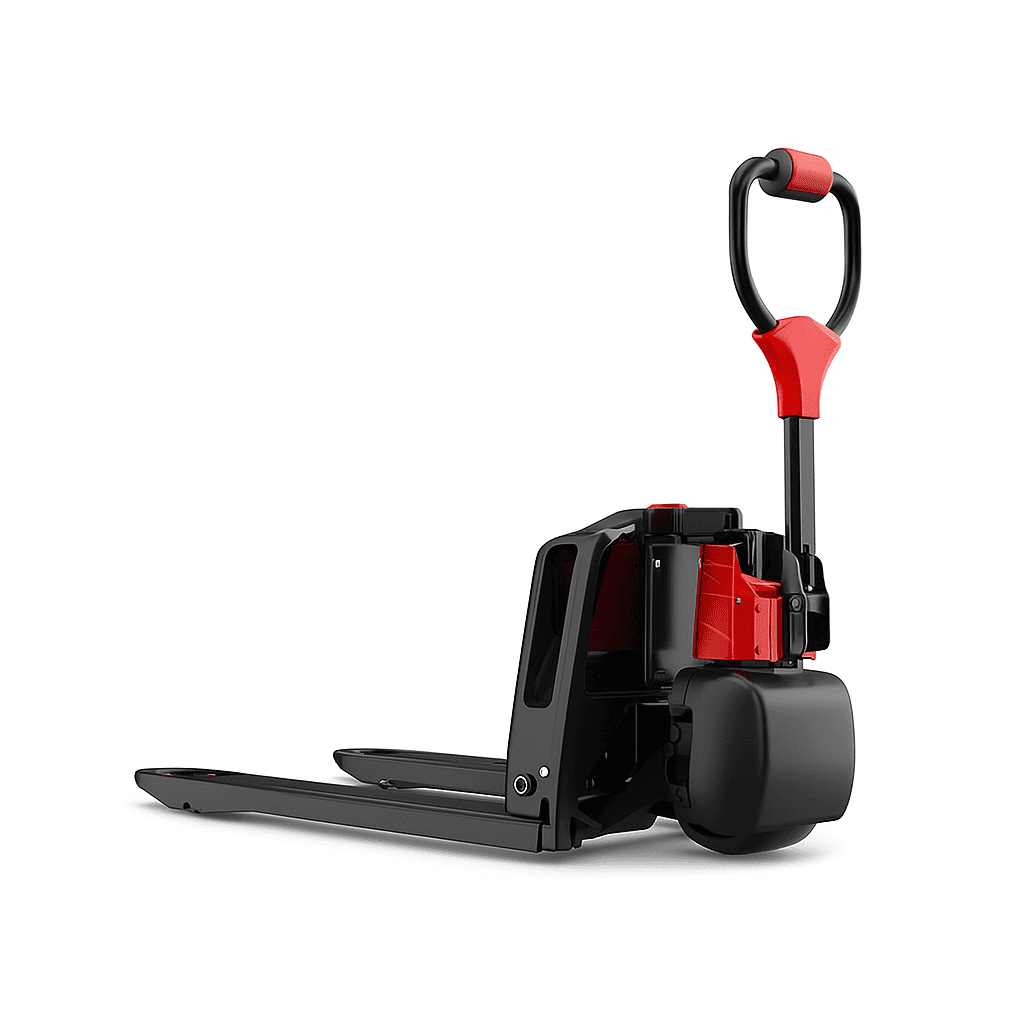
Warehouses are moving faster than ever, and labor costs keep rising. Many buyers come to me asking how a battery-operated pallet truck actually improves real-world operations—not just on paper.
The best functions of a battery-operated pallet truck include electric drive, powered lifting, safety braking systems, variable-speed control, long-lasting lithium batteries, and ergonomic handling. These features reduce labor fatigue, improve productivity, and lower long-term operating costs.
I still remember my first US distributor visit in 2018. Their manual pallet jacks were wearing operators down—15 km of walking per shift. After switching to electric walkies, they cut cycle times nearly in half. That moment reinforced why understanding functions matters more than understanding spec sheets.
Why Warehouse Buyers Prefer Battery-Operated Pallet Trucks
Warehouse buyers prefer battery-operated pallet trucks because they boost speed, reduce labor fatigue, improve safety, and significantly lower long-term operating costs.
Battery pallet trucks have become essential equipment in retail, logistics, and manufacturing. Across North America, Europe, and Southeast Asia, the main drivers are:
- speed
- ergonomics
- safety
- predictable operating cost
👉 OSHA official forklift/powered truck guidance:
https://www.osha.gov/powered-industrial-trucks
How Electric Drive Improves Speed and Reduces Operator Fatigue
Electric drive transforms pallet handling. Instead of pushing 1–2 tons manually, operators simply walk or ride behind the truck while the motor handles the heavy work.
Typical productivity gains (based on Voltruk customer data)
- 30–45% faster pallet movement
- Lower fatigue over 8–12 hour shifts
- Higher consistency across operators
- Fewer injuries (compared to manual jacks)
A night-shift manager at our LA warehouse once told me:
“Frank, our team finally stopped complaining about sore backs.”
Ergonomic & safety advantages
Battery-operated pallet trucks provide:
- controlled acceleration
- power-assisted steering
- electric braking
- ergonomic tiller
These reduce wrist, shoulder, and back strain.
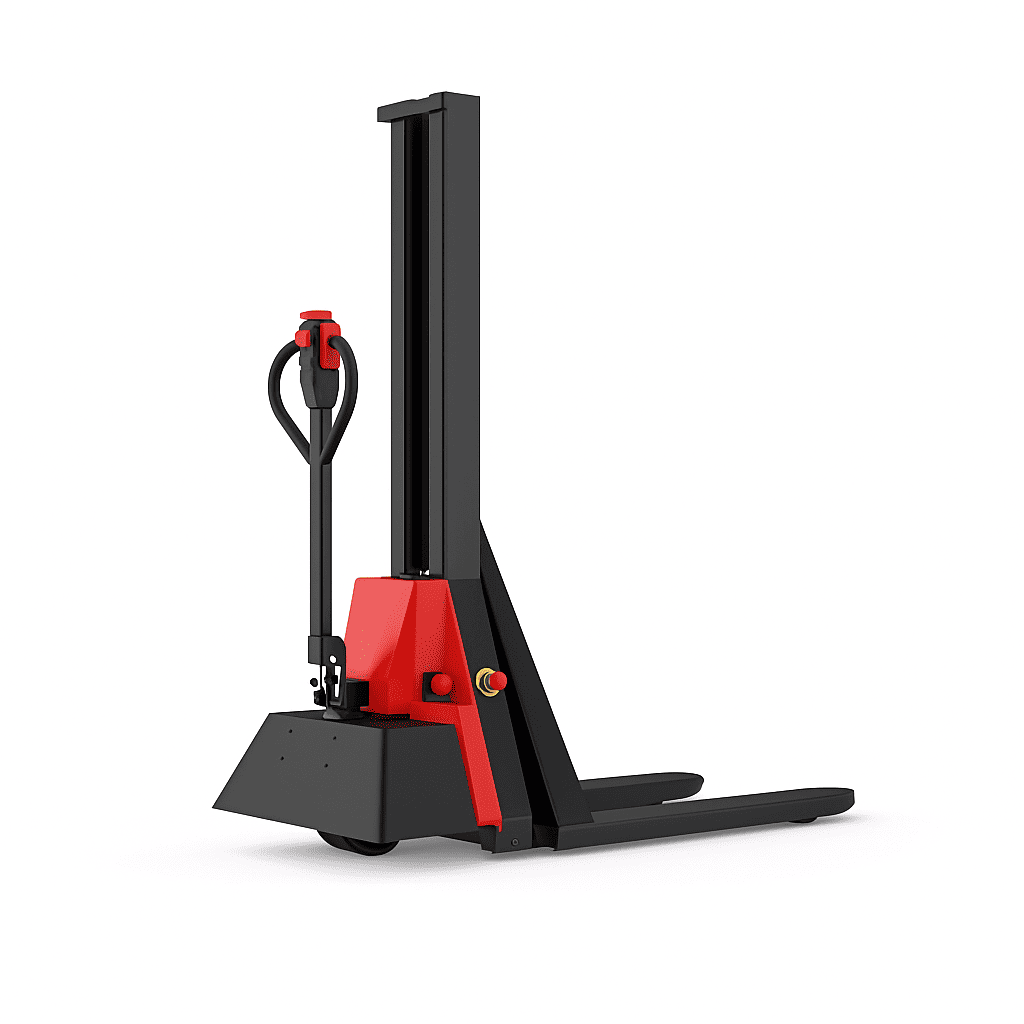
Cost Savings: Total Cost of Ownership (TCO)
Purchase price is just the beginning. Total cost of ownership matters more.
Manual vs Battery Pallet Truck
| Cost Factor | Manual Jack | Battery Walkie |
|---|---|---|
| Labor hours | High | Low |
| Fatigue | Severe | Minimal |
| Speed | Slow | Fast |
| Accident risk | Higher | Lower |
| Maintenance | Low | Low |
IC vs Battery Pallet Truck
| Cost Factor | IC Truck | Battery Walkie |
|---|---|---|
| Fuel cost | High | Low |
| Emissions | Yes | Zero |
| Noise | High | Low |
| Maintenance | High | Low |
When lithium delivers the best ROI
Lithium pallet trucks excel in:
- high-turnover warehouses
- multi-shift operations
- cold storage
- tight spaces where IC trucks struggle
👉 UL official lithium battery safety resources:
https://ul.org/resources/battery-safety-resources
Core Functional Advantages of Modern Battery Pallet Trucks
Key advantages include:
- electric lifting
- variable-speed control
- precise braking
- anti-rollback
- stable load handling in narrow aisles
Most buyers underestimate how small functions dramatically impact daily workflow—especially in e-commerce and FMCG.
Electric Lifting, Smooth Travel & Variable-Speed Control
Electric lifting reduces physical strain and improves pallet placement.
Modern controllers (Curtis, ZAPI) manage:
- acceleration curves
- regenerative braking
- downhill control
- anti-rollback
- overload protection
👉 CDC/NIOSH powered industrial truck safety:
https://www.cdc.gov/niosh/topics/poweredindustrialtrucks/
Common mistakes in speed settings
- startup too fast
- braking too short
- reverse speed too high
- overly sensitive tiller sensors
Recommended settings
- moderate acceleration
- safe reverse speed
- smooth braking
- test with full load
Small tuning adjustments = major improvements.
Safety Features: Braking, Anti-Rollback & Operator Protection
Safety is one of the biggest reasons buyers shift from manual to electric.
Factory QC checks include:
- slope holding
- emergency braking
- overload alarms
- steering sensors
- tiller safety cutoff
When I visit customer sites, I always demonstrate the tiller cut-off—it prevents countless accidents.
Narrow-aisle safety adjustments:
- lower max speed
- increased brake sensitivity
- turtle mode
- strengthened anti-rollback
These reduce collisions and improve precision.
How Battery Technology Enhances Performance
Battery technology affects uptime, charge time, cold performance, and long-term cost.
Lithium has become the standard for most 3PL and warehouse operations.
Lithium vs Lead-Acid (Real Use Cases)
Lithium (LFP):
- 2–3 hr fast charging
- 2500–4000 cycles
- zero maintenance
- works in −20°C cold rooms
Lead-acid struggles with:
- 8–10 hr charge time
- water refilling
- heat issues
- poor cold-room performance
BMS protections buyers should check
- overheat cutoff
- low-temp protection
- short-circuit protection
- cell balancing
- current limiting
👉 IEC official battery standards:
https://www.iec.ch/dyn/www/f?p=103:46
Motor, Controller & Drive System Capabilities
Why AC motors are standard
AC motors offer:
- no brushes
- smoother speed control
- better heat resistance
- higher torque
- lower maintenance
They are ideal for continuous-use, dusty, or humid environments.
Tuning speed curves for different environments
- factory floors → faster acceleration
- retail stores → quieter / smoother braking
- ramps → stronger torque & anti-rollback
We tune each unit before shipment based on buyer requirements.
Choosing the Right Battery Pallet Truck
Correct selection depends on:
- load capacity
- pallet type
- fork size
- aisle width
- floor conditions
- gradeability
Choosing by price alone is the easiest way to pick the wrong machine.
Load Capacity, Fork Size & Pallet Compatibility
Pallet structure determines truck compatibility.
Common pallet types:
- open-bottom
- closed-bottom
- euro pallet
- US/GMA pallet
- custom industrial
Compatibility checklist
- fork width fits entry
- fork length fits pallet depth
- clearance ≥ 85 mm
- load center matches rating
Typical mistakes:
- 550 mm forks used for 685 mm pallets
- forks too short for long loads
- wheel interference with bottom boards
Always send pallet photos before ordering.
Aisle Width, Floor Conditions & Gradeability
Aisles determine maneuverability more than any other factor.
Turning radius benchmarks
- walkie: 2.0–2.2 m
- rider: 2.4–2.6 m
- long forks: add 0.3–0.5 m aisles
Floor & slope considerations
- loaded gradeability: 5–7%
- unloaded: 10–15%
- polyurethane wheels → smoother
- nylon wheels → more durable
Industry Use Cases
Different industries maximize these functions differently.
Logistics, Fulfillment & Retail
3PLs benefit most from:
- variable-speed control
- anti-rollback
- precise braking
- long forks for double pallets
- cold-room batteries
Manufacturing, Food & Cold Storage
Factories demand:
- reinforced forks
- AC motors
- industrial load wheels
Cold rooms require:
- low-temperature lithium
- waterproof wiring
- anti-condensation design
- food-grade grease options
👉 FDA food facility guidance:
https://www.fda.gov/food
👉 USDA food & nutrition resources:
https://www.usda.gov/topics/food-and-nutrition
My On-Site Diagnostic Checklist
Daily workload questions:
- pallets per shift
- travel distance
- operator rotation
- break times for charging
Red flags I look for:
- blocked aisle turns
- uneven floors
- oversized pallets
- damaged bottom boards
Many mistakes come from misunderstood pallets.
Common Mistakes & Fixes
Misconfigured speed/brake settings
Fix by:
- lowering acceleration
- increasing braking
- testing full load
Ignoring long-term serviceability
Check:
- controller stock
- wheel availability
- motor replacement times
- after-sales response speed
Our after-sales flow is simple:
Photo → Video → Engineer Diagnosis → Parts → Credit
Conclusion
Battery-operated pallet trucks offer:
- faster workflows
- lower labor cost
- safer operation
- predictable uptime
The best results come from matching the truck to your actual aisles, pallets, floor conditions, and workflow.
Voltruk provides:
- factory-direct pricing
- 1-unit MOQ
- OEM color/logo
- 15–25 day delivery
- LA warehouse stock
- responsive after-sales support
📧 info@voltruk.com
🌐 https://www.voltruk.com
Ready to Move Forward?
- Get wholesale quote
- Request OEM samples
- Download temperature chart PDF
- Visit our LA warehouse
FAQ (10 Q&As)
Q1: What is the main advantage of a battery-operated pallet truck?
Electric drive eliminates manual pushing, improves speed, and reduces fatigue while enhancing safety.
Q2: Is lithium better than lead-acid?
Yes. Lithium charges faster, lasts longer, and works better in cold storage.
Q3: How long does the battery last?
Typically 4–6 hours of continuous operation. With opportunity charging, it can support multi-shift use.
Q4: Can pallet trucks operate on uneven floors?
Yes—match wheel type to floor conditions (polyurethane vs nylon).
Q5: What safety features should I look for?
Regenerative braking, anti-rollback, speed control, tiller cutoff, and emergency stop.
Q6: How do I choose fork width & length?
Match fork width to pallet entry; match length to pallet depth.
Q7: Do these trucks work in cold storage?
Yes—if equipped with low-temperature lithium and protected wiring.
Q8: What maintenance is needed?
Very low: wheel checks, lubrication, and connector inspection every 2–3 months.
Q9: How fast can they travel?
Normally 4.5–6 km/h, depending on load and tuning.
Q10: Do you offer OEM customization?
Yes—color, logo, fork size, cold-room options, and dealer branding.