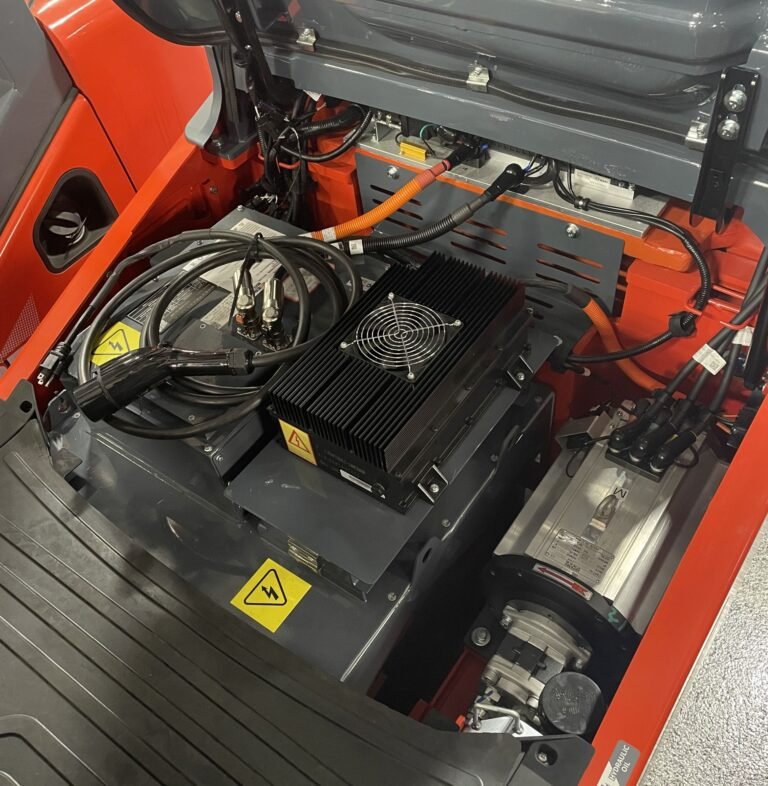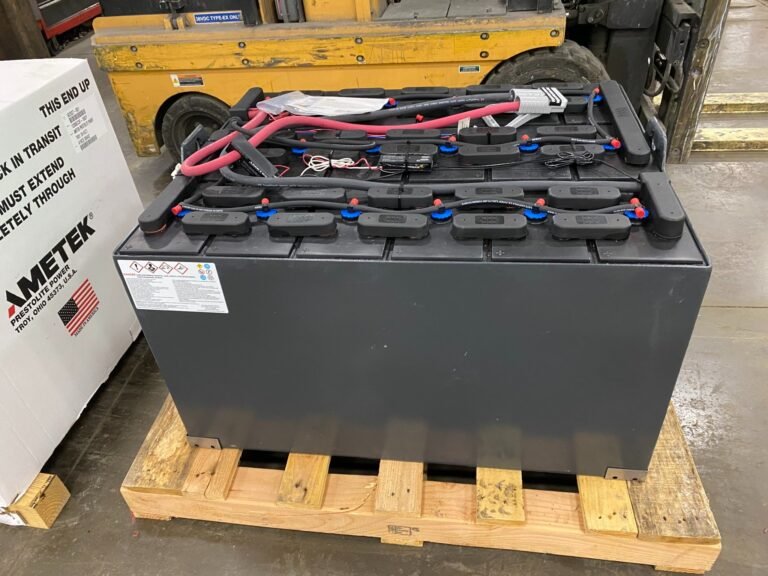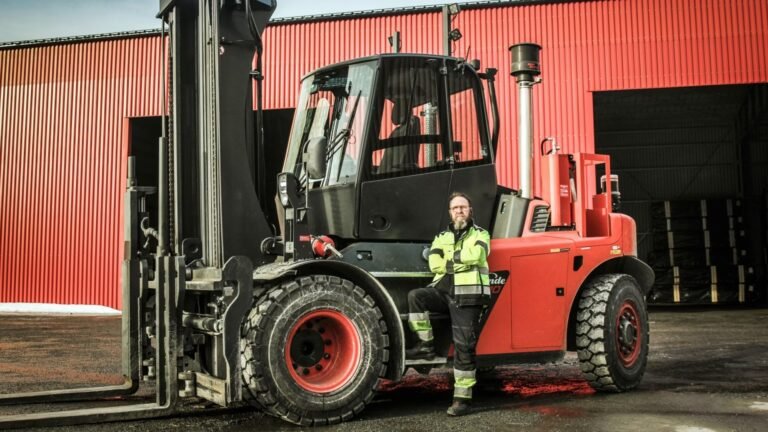

Downtime, rising maintenance costs, and slow warehouse turnover—these are problems I’ve seen repeatedly when visiting customer sites around the world. And in most cases, they come from using the “old generation” of forklifts.
Lithium-ion forklifts outperform standard forklifts with faster charging, higher energy efficiency, and lower lifetime costs—helping warehouses operate longer with fewer interruptions.
I realized this years ago during a customer inspection when their lead-acid fleet failed peak-season demand.
What Makes Lithium-Ion Forklifts More Efficient?
Lithium-ion forklifts deliver faster charging, stronger energy efficiency, and consistent power output—allowing continuous warehouse operation without performance drop.
Compared to standard forklifts (lead-acid or internal combustion), lithium-ion machines immediately solve one major issue: lost time. In export projects from Europe to South America, I’ve seen how lithium systems transform daily operations.
Faster, More Efficient Energy Conversion
Lithium batteries maintain a flat discharge curve, keeping full power until nearly empty.
Lead-acid loses power after 50–60% discharge—slowing lifting and travel speeds.
Rapid Charging
With our Voltruk 80V CATL system, I’ve tested fast charging that restores most usable energy in about two hours. Many customers now use opportunity charging during shift transitions.
Zero Maintenance
Lead-acid requires:
- Water refilling
- Equalization
- Acid cleanup
- Ventilated charging rooms
Lithium eliminates all of this—saving thousands annually in labor and downtime.
Smooth Operation
The maintenance-free AC drive motor offers:
- Fast acceleration
- Consistent power
- No carbon-brush wear
Ideal for high-traffic warehouse environments.
H3: Energy Consistency in Real Warehouse Conditions
Energy consistency is why lithium wins.
If a warehouse operates more than 6 hours per day, lead-acid’s power decline becomes a bottleneck.
Lithium also performs reliably in 0–10°C cold storage, making it a favorite in e-commerce, FMCG, and food logistics.
H3: Charging Workflow Optimization
To maximize battery life, I recommend:
- Short top-up charges every 3–4 hours
- Avoid deep discharge
- Let BMS manage temperature protection
- One full charge at night
This aligns naturally with warehouse shift schedules.
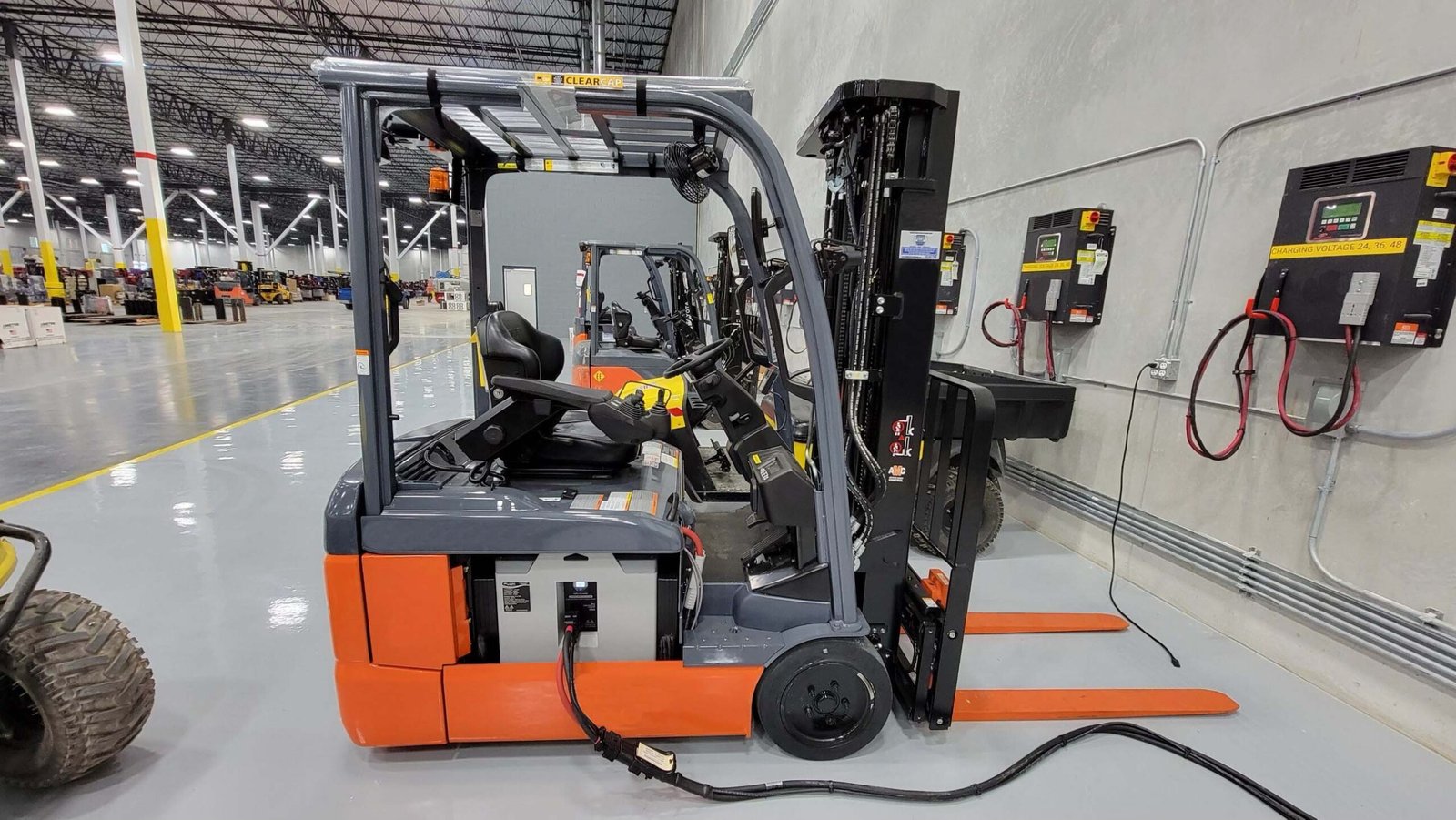
How Does Lithium-Ion Reduce Long-Term Operating Cost?
Lithium-ion forklifts reduce lifetime cost through:
- Longer battery lifespan
- Lower maintenance
- Better energy efficiency
- Dramatically reduced downtime
Dealers often tell me, “Lithium is more expensive.”
But over 3–5 years, lithium is typically 25–40% cheaper.
Longer Battery Life
- Lead-acid: 1,000–1,200 cycles
- Lithium: 3,000–4,000+ cycles
Many customers replace lead-acid batteries twice before servicing a lithium pack once.
Lower Maintenance Cost
Lead-acid requires intensive maintenance.
Lithium requires almost none.
Higher Energy Efficiency
Lithium charges cooler, wastes less energy, and delivers more usable power—saving 15–30% on electricity bills.
Hidden Downtime Cost
Every offline hour impacts output.
Lithium’s minimal downtime massively improves warehouse productivity.
Comparison Table
| Metric | Lithium-Ion Forklift | Standard Forklift (Lead-acid / IC) |
|---|---|---|
| Battery lifespan | 3,000+ cycles | 1,000–1,200 cycles |
| Energy efficiency | High & stable | Medium, drops with age |
| Maintenance | Very low | High |
| Charging time | 2–3 hours | 8–10 hours |
| Downtime impact | Extremely low | Medium–high |
| Ventilation room required | No | Yes (lead-acid) |
H3: Battery Lifecycle Calculation (Real Case)
Annual Cost = Purchase Cost + Energy Cost + Maintenance Cost + Downtime Loss
Lithium consistently finishes 25–40% cheaper over three years.
This is why most rental companies are switching to lithium fleets.
H3: Avoiding Overuse and Thermal Stress
Lithium is advanced—but not indestructible.
Tips from Voltruk QC data:
- Keep battery under 55°C
- Operate within 20–80% SOC
- Always use OEM chargers
- Check terminals/cooling channels periodically
What Safety Advantages Do Lithium-Ion Forklifts Offer?
Lithium-ion forklifts deliver:
- Strong thermal stability
- Sealed construction
- Smart BMS protection
Greatly reducing operational risks.
Layer 1: Cell Chemistry
CATL / EVE / Gotion cells pass strict thermal tests.
Layer 2: Battery Pack Structure
Includes aluminum housings, fire-resistant layers, and shock protection.
Layer 3: Smart BMS
Real-time monitoring of:
- Temperature
- Voltage
- Current
- Balancing
- Over-load protection
Lithium eliminates:
- Acid fumes
- Corrosion
- Spills
- Ventilation room requirements
Compliance is also easier (CE, UN38.3, MSDS).
H3: Real Incident Prevention (My Anecdote)
A Southeast Asian customer showed me a corroded chassis caused by leaking acid.
After switching to lithium, he said:
“This is the first time we’re not worried about what’s leaking under the forklift.”
Peace of mind—that’s true safety.
H3: Risk Reduction Checklist
- BMS with full protections
- CE + UN38.3 + MSDS certifications
- Sealed aluminum enclosure
- Safe charging 0–45°C
- Temperature sensors & cell balancing
Voltruk includes all of these as standard.
Why Are Lithium-Ion Forklifts Better for Dealers, Warehouses & Rental Fleets?
Lithium forklifts increase utilization, reduce downtime, and minimize after-sales issues.
1) Warehouses: Higher Turnover
Stable power + opportunity charging = continuous operation.
2) Dealers: Fewer After-Sales Problems
Lithium generates 40% fewer service cases.
3) Rental Fleets: Higher Utilization
Units stay in the field longer with fewer breakdowns.
4) Factories: Clean, Quiet, Compliant
Ideal for food, pharma, and retail distribution.
H3: Utilization Rate Formula
- Daily operation > 4 hours → Lithium recommended
- 2-shift operation → Lithium strongly recommended
- 3-shift operation → Lithium mandatory
This rule comes from 300+ international projects.
H3: OEM & Branding Advantages
Voltruk provides:
- Custom colors
- Custom panels
- Custom logos
- Custom packaging
- 20–25 day OEM delivery
Great for building private-label brands.
Conclusion
Choosing a lithium-ion forklift is not just an upgrade—it’s an investment in:
- Higher efficiency
- Operational stability
- Long-term profitability
Across hundreds of customer sites, one lesson is clear:
Every minute saved in your warehouse becomes real profit.
If you're selecting models, upgrading a fleet, or expanding your rental business, I’m happy to help.
Next Steps (CTA)
👉 Get wholesale quote
👉 Request OEM samples
👉 Download temperature chart PDF
👉 Visit our LA warehouse
👉 Email Frank: info@voltruk.com
FAQ (10 Q&As)
Q1: Is a lithium-ion forklift worth the higher upfront cost?
A1: Yes. Lithium forklifts save 25–40% over their lifetime through lower maintenance, fewer replacements, and reduced downtime.
Q2: How long can a lithium forklift operate on one charge?
A2: Usually 6–8 hours continuously. With opportunity charging, many fleets run near 24/7.
Q3: Are lithium forklifts suitable for cold storage?
A3: Yes—especially with CATL/EVE/Gotion cells. Low-temperature BMS or heated packs improve stability.
Q4: What maintenance does lithium require?
A4: Almost none. No watering, acid cleaning, or equalization charging.
Q5: How fast can a lithium forklift charge?
A5: 2–3 hours to recover usable power; 4–6 hours for a full charge.
Q6: Do lithium forklifts need a special charging room?
A6: No. Lithium produces no gas or acid fumes.
Q7: What is the typical battery lifespan?
A7: 3,000–4,000+ cycles (5–7 years or more).
Q8: Can I customize lithium forklifts with my branding?
A8: Yes. Voltruk offers OEM colors, logos, and packaging.
Q9: Do operators need extra training?
A9: No. Operation is the same—charging is even easier.
Q10: How do I choose the right model?
A10: Consider load, lift height, working hours, aisle width, and ground conditions. Send your requirements and I’ll recommend the best option.